Showing posts with label bookish opinion. Show all posts

Sunday, 29 January 2012

Sunday Salon: Making peace with Kindle

The Kindle... The end of all real books???!!
"You kids with e-readers! Get off my lawn!"

That's basically what my 2009 post about the digital revolution in reading sounded like. I was the crochety old lady who was more than happy with her good old-fashioned paper books, thank you very much. All this gumph about new-fangled devices for reading, I huffed. I had no need for such shenanigans.... Did I?

By early 2011, I had softened considerably. It wasn't that I was against e-readers you see, I just preferred the entire reading experience. I'm one of those people who unashamedly sniffs books. I buy notebooks when I have no need for them. I like the way paper feels between my fingers. The clinical diagnosis, were I to get one, would likely be Severe Paperphilia. A diagnosis I embrace wholeheartedly - but the question that kept nagging in the back of my mind was, did my love affair with paper necessarily have to be so tightly linked to my love of the written word?

This question was answered at the end of last year, when my beloved husband bought me an iPad for Christmas. This gift came at a time in my life where reading for pleasure had become nearly non-existent due to the required reading necessary for the thesis which had taken up nearly all of my time and severely depleted my reading mojo. It was also a matter of timing - when I was thesis-free (that is, out of my house) and had the mental space for reading I was typically on some form of public transport or at a loose end somewhere. I had fallen out of the habit of carrying a book with me in my bag, for some reason but now, the iPad would be with me pretty much all the time.

Casually, I downloaded the Kindle App. I looked up. Checked behind me. No-one was screaming. I didn't hear any bookstores bursting into flames in the near vicinity. Excellent. Now, to find something to read. I downloaded Book of Mercy - an appropriate title, given my feelings about this whole foray into digital reading.

It was brilliant - not just the book but the whole experience. From click-to-buy to ready-to-read took all of 10 seconds. This is no small thing when, living where I do, the acquisition of books is not an easy task. The closest bookstore with a reasonably decent selection of English language books is a 15 minute bus ride away from my home and the one with the best selection is over an hour away by bus in Taipei. Ordering books online is easy but means waiting for two or more weeks for the books to arrive. Given this, I'm sure you can see why the immediacy of this appeals so much!

My swagload of real books (Image credit: Kath Liu)
Aside from that, the thing I worried about the most was the reading experience. Would it feel cold? Would it be uncomfortable holding an electronic device in my hands rather than a book? It certainly wasn't the same, but there were a couple of unexpected benefits, including the dictionary search function which helped me out on a few occasions as I read Game of Thrones. Highlight a word and its definition helpfully appears at the bottom of the screen. Further, I could add notes or highlight without feeling like I was committing the carnal sin of writing on a book. In fact, the only major downside was the constant distractions from email, Facebook and Twitter notifications. When you're deep into a dramatic moment, the last thing you need to know is that Bob Jones "Liked" your photograph. Easy solution: disconnect from the internet.

So there it is. Who knew. The Digital Dissenter has been turned and having access to e-books has shattered my reading slump. I have embraced the positives of this new way of reading and ceased worrying about my beloved physical book - I reckon those babies are going to be around in this world for a lot longer than I will, and I ain't planning on going anywhere for a good while yet.

And just to make sure, I bought myself a swagload of real books - and delightedly sniffed each and every one of them. Bliss.

Tuesday, 1 March 2011

I'm not a digital hater, I just prefer printed.

E-Book on an iPad
Credit Here
When e-books and digital readers first came out I was horrified. Who on earth would trade in a trusty paperback for a computer screen? How are you supposed to get comfortable in front of a computer? And what about bookstores and libraries? Are my days of spending hours drifting happily between stacks of books, running my hands across the spines of volumes of untold secrets and knowledge on their way out? Panic rose up and the hairs on the back of my neck stood up when I imagined this world without printed books. It was not a pretty vision.

Luckily this was all a bit of a wild overreaction but not without cause, it must be said. The way some folks were talking this nightmare vision I had seemed imminent. But just like the television did not kill off radio and internet has not made everyone unsocial hermits who sit at home all day in their underpants and have no idea how to interact with each other, digital readers aren't going to replace printed books. It has merely added a new, convenient and lightweight way to read - one with a multitude of benefits, for sure.

Being 28, I'm not quite a digital native but was a young enough digital migrant so that living with and using technology seems like second nature. So why haven't I run out and bought myself some kind of digital reader yet? Surely it seems like the next logical step but truthfully I have zero desire to have one and today it finally dawned on me while I was reading this blog post on Accidental Moments this morning why this is. It's not just the act of reading words that form a narrative that I love about books. It's the whole experience of it.

My bookshelves
Photo by Kath Liu
My book experience starts, ideally, in a good bookstore. Quite often I have a mental list of books I want to buy as well as a sub-list of "If I find them that'd be nice" books. But I'm not really there just to buy a product and get out. It's not the purchase, it's the browsing. The smell of the pages of new books. The muted silence punctuated only by the sound of a page being turned or a book being slotted back into a shelf. The feeling of being surrounded by one of the things I love most in the world. I swear that if heaven is your happy place, my heaven is going to be an immense bookstore with a cosy coffee shop with massive sofas overlooking the ocean.

Once the book comes home with me, it's time to find it a place on my bookshelves. I don't have a massive collection of books as my bookshelf space is necessarily limited by the fact that I live in an apartment in Taiwan but with a bit of 'creative stacking' I've managed thus far. I love the way my bookshelves look, stuffed full of all of the different coloured spines. It looks inviting and friendly. It makes me happy looking at them. It's nothing impressive but it's my own little library.

Which brings me to my favourite part of the experience: sharing books. On average about 7 of my books can at any time be found floating around various locations in Taiwan, being read and enjoyed by other people. It's one of the best feelings to recommend a book to someone and have them absolutely love it. The love of sharing reading experiences is why I love Bookcrossing, book clubs and book blogging so much. Passing a much-loved book around to be enjoyed by others feels like sharing a slice of happiness. You just can't do that with a book downloaded to a digital reader unless you're willing to surrender your reader to someone for a space of time.... not something people are typically willing to do, understandably!
Me, reading.
Photo by Kath Liu
So aside from the fact that I don't think there's anything quite like curling up on the couch with a hot cup of tea, a biscuit or four and a trusty paperback, it's not only the actual reading of a book that makes me prefer the printed book to the digital books. From bookstore to shelf to my lap to someone else's and back again - it's the love of this whole process that makes me choose printed every time. Call me old-fashioned if you like. It's just my personal preference.

Which do you prefer? Printed or digital? Why? Does it change according to situation? Let me know!

Thursday, 10 February 2011

Musical reading or reading musically?

Image Credit Here
This is something I've not yet been able to personally understand - people plugged into their MP3 device who are reading at the same time. It truly flummoxes me. Are these people reading with the music as background noise or are they skimming the book whilst rocking out to whatever they might be listening to. I have considered, of course, that they might actually be listening to the audiobook of the book in front of them but I somehow doubt that's the case for the majority of these musical multi-taskers and because of that, they fascinate me.

Noise level whilst reading is a really personal thing that depends not only the kind of reader you are but what kind of thing you're reading. If I'm reading a dense theoretical article or a work of fiction, then there is no way that music beyond the realm of background muzak can be tolerated. That said, if I have complete silence then I get distracted far more easily. It's like a part of my brain is a small child that needs to be distracted so the grown-up part of the brain can concentrate. For anything less dense like an interesting but not too challenging article then any music without lyrics is fine, so this is where my 'oontz' collection of Ministry of Sound and the like comes in pretty handy. But if anything with lyrics is playing, then I am really only skimming whatever I'm reading. As for non-musical noise, I have my dear husband to thank for training me to be able to block out nearly anything after years of being in the same room as he plays Playstation games!

In any case, the reason I'm writing this post is to find out from you about your 'reading condition' preferences. Do you need silence? A bit of noise? And if you're one of those incredible people who can listen to their iPod AND read I'd love to hear from you!

Friday, 4 February 2011

Stuff that's tickled me recently... (2)

E-Book on an iPad
Credit Here
E-Books increase people's reading time:
A recent study from iModerate Research Technologies and Brock Associates has found that people who have a MFD (Multi-functional device) with them basically all of the time now read more as a result of always having a book with them in electronic form. And not just one book either - they can have a huge number of titles in their bag with them thanks to e-books. They're generally reading at times when I myself would pull a book out of my bag and sneak in a few pages - on the bus, waiting for an appointment etc - except now they don't have to be a dedicated bookworm who carries books around with them specifically for these times. They just happen to have them already. While I'm not personally an e-book reader (I just can't go past a hard copy book) I have nothing against them and in fact cheer them on heartily if it means that people are now reading more. I'm all for that!

From E-books to Vooks:
Now this is something funky - Vooks. Apparently these are basically e-books on crack, the souped-up version that include interviews, video clips, the whole multimedia experience of what was once a humble books, 300 or so pages of the printed word. I'm not entirely sure if I think this is a brilliant idea or if it's a bit gimmicky. I guess time will tell.

Toyo Shibata
C
redit: Reuters/Asukashinsha/Handout
It's never too late:
Now this is one for the inspirational files - a 99-year old Japanese grandmother, Mrs. Toyo Shibata, has just sold 1.5 million copies of her first book (self-published) of poetry. She turned to writing poetry when she had to give up dancing at 92 years old. (92! I'll be chuffed to still be kicking around at that age, much less worrying what  I should do with my time now I have to stop dancing!) Now, at 99, her poetry book is selling like hotcakes. Just goes to show it's never too late to have a crack at something. I take my hat off to her.


Yann Martel
Credit: Yann Martel


Man on a mission:
Yann Martel, best known for his Booker Prize winning The Life of Pi, has spent the last four years and 100 books trying to educate the Canadian Prime Minister on the joys and value of literature. He's quoted in the article as saying "We've become slaves to our work and have forgotten that it's in moments of leisure and stillness, when we're free from working with a hoe or at a keyboard, that we can contemplate life and become fully ourselves."While I know nothing about the Canadian PM or Canadian politics in general, this is totally an endeavour I can get behind. I'm all for getting people hooked on the joys of reading and helping those in charge of the purse strings value the arts in general. Without the arts, what do we have? When our descendants look back at us it's not only the business successes, the architectural achievements or technological advances they will care about. They'll (surely) want to know more about us as a people, want so glimpse inside our minds and souls. Where better to capture that than in our literature and film? 

Bibliotheca Alexandrina at night
Credit here
Keeping the libraries safe:
Despite massive unrest in Egypt and demands for out with the old and in with the new, this doesn't apply to the books at Bibliotheca Alexandrina which is being protected by organised groups of the city's youth. For all of the despairing head shaking that usually goes on about 'the youth of today' I think it's fair to say that Egypt, at least, doesn't seem to have much to worry about. Good on you, guys! Keep up the good work.

Saturday, 29 January 2011

What next? How I find my next read.

My current TBR pile!
I don't, and never have had, any trouble finding the book I want to read next. I seem to be surrounded by a perpetual and ever-increasing pile of books ll vying for my attention. As it is, I'm in a habit of reading about 3-4 different books at the same time, which some people find hard to fathom but I'm sure some of you will understand - I know Sheila from Book Journey will if this post is anything to go by!

In any case, I saw this Guardian article from a couple of years ago about a fun little website called The Book Seer. If you type in the last book you read and enjoyed, it will generate a list of recommendation through Amazon and LibraryThing for you to choose from. As Chris Powers notes, it's unclear on what factors (genre? author?) recommendations are generated but it is a bit of fun and hey - I'm all for reading things I wouldn't necessarily have done otherwise. It's a fact: there are far too many books and not enough time and one person could never know about all of the great books in the world.

Then I started wondering - how do I really find my next book? There's obviously the required reading schedule that comes along with writing a thesis, loads of theoretical articles, literary criticism and what not but a girl needs a bit of 'fun' reading, doesn't she! A bit of elicit "this isn't going to get me credit but I don't care" reading. I came to the conclusion that it was Bookcrossing, book club and blogging that were most responsible for my massive TBR pile. The fact that no one person can know even a fraction of all available good reads out there is one of the key reasons I spend so much time reading other people's blog and listening to podcasts about books. It seems to be my life's mission is to consume as much good literature as I possibly can without becoming a hermit or going blind which so far is going reasonably well (bad eyes notwithstanding!) but I know I could always read more and at the rate at which books are published I have to accept I will never keep up. But it's fun trying!

How do you find your next read? Do you even think about it, or do you (like me) have a constant pile of books waiting for you that just seemed to magically appear? I'd love to hear from you!

Monday, 15 November 2010

Bookdrum Honour!

I was casually reading the Bookdrum email newsletter a couple of days ago when I came across this:

Most Popular Profiles

The Top 5 profiles, by number of Facebook "Likes" are:
1. Saturday by Ian McEwan. Profile by Kathryn Liu
2. The Cure by Antoine Devine. Profile by the author
3. Dracula by Bram Stoker. Profile by Victoria Hooper
4. The Graveyard Book by Neil Gaiman. Profile by Jenny Martin and Kat Matfield
5. Clan by David Elliot. Profile by the author
If you'd like to see your profile in the Top 5, encourage your friends to click the Facebook Like button on the profile index page. This will also plant a link on their Facebook wall, bringing new visitors to your profile.

Hey! What the... I'm number one!!! Cue happy dance (which I'm glad no-one saw!) and much whooping! The coolest thing was that the Likes had all come from people I didn't know. Very cool. Made my month.

Anyway, if you'd like to see (and potentially "Like"!) my profile, click here and check it out. 

Wednesday, 15 September 2010

Poetic breaks

The silvery notes of dreams
Cascade through my consciousness.
Drifting dreamscapes
and flitting fantasies,
Tumble down,
Splish splash
Into the bottomless pool.

Kath Liu, 2008

Monday, 13 September 2010

Are you a Lone Reader?

I came across this BBC article a couple of days ago and it got me thinking about reading. Back in the days of yore, folks used to gather around campfires and entertain each other by telling stories but the advent of the industrial revolution and capitalism boiled this love of stories down into the individualised package that we know and love today: the novel. Ostensibly, this made reading an individual endeavour - if you've ever tried to co-read a book in a short-resourced English Lit class in high school, you will know why - but the social aspect out of sharing our stories is still very much there.

Reflecting on my own reading practices, I realised that while yes, much of what I read, I read alone I would KILL for someone to read a book to me. Or pay for it through the Audiobooks section of iTunes. As a kid my father read all sorts of classics to us, including all three books of Lord of the Rings. For a bloke who worked a 10 hour day that's some achievement. Hearing the story in your own voice in your own head is great but hearing it from someone else can add dimensions to it that you might not have thought of, like how Gollum sounds when he coughs or the pure terror of the Black Riders.

Perhaps my love of reading aloud also comes in part for my penchant for the sound of language. The beauty of a well-written sentence can't be underestimated. It's when it is spoken that words are most alive - light bounces off them and illuminates dark corners of previously unexplored ideas. I really could wax lyrical here about this but I'll spare you more details. Safe to say I'm a major language geek and prefer to hear poetry rather than read it.

My third and final point proving that I'm totally a social reader: book club. Nothing and I mean nothing gets me more animated than talking about books. When I have a mug of coffee in my hand, a slice of cake on my plate and several good friends all in the same place talking about the same book, I'm pretty well in heaven. In fact, if heaven does not have a good library and book clubs, I really don't fancy going there. Also the fact that I write on here about books proves that I'm a social reader. I want to put my thoughts out there and see what other people think too. Blogging is, in a way, a huge book club meeting online.

So yet again, I'm keen to know what you think. Are you a Lone Reader or a Social Bookerfly?

Saturday, 11 September 2010

Bookish things I have been up to offline: Feature shelves

As I said in my last post, I've staged a quiet take-over of the small collection of books that we have at the Community Center where I work. We cater to the needs of the International Community in Taipei and, being a transient bunch, people regularly leave and donate their books to us. We've got about 900 books and each and every one of them has been registered on bookcrossing as we are now an official bookcrossing zone. Also I re-organised the entire collection to be categorised by genre rather than just alphabetically by author because I'm fussy. All of this has taken months as I only work part-time but has been achieved with a lot of help from some of our student volunteers and now it's finally in order and I'm feeling pretty chuffed.

Then my boss says "Hey, you know what? Why don't I give you a budget to buy a couple of recent books every month to keep our collection up-to-date?"

Pay me to go pick out books? Do you need to ask?!

And so the idea of the Feature Shelf was born in my mind. I decided that each month I would buy books in theme and set up a feature shelf showcasing these books and any others that were along the same theme. September is "Memoir Movie Tie-In" as Eat, Pray, Love is being released in cinemas here pretty soon (October) so I figured people might like the chance to read the book beforehand. Not to mention its a personal favourite of mine - that's totally nothing to do with it! So keeping in theme I also got Julie and Julia as I figured it was a pretty popular movie but most folks I know hadn't read the book but wanted to. So voila! September's feature shelf is up and running.

All I need to do now is come up with more themes! Next month I was hoping to have a Booker Prize shelf in honour of the winner being announced but I wanted to ask you guys to see if you had any fun ideas about possible themes. Let me know what you think - I'd love to hear your ideas!

Thursday, 9 September 2010

Reading against type - Liu vs Palahniuk

I don't remember what it was that got me thinking about it but a couple of weeks ago I started thinking about the kinds of books I read. It was probably staring at the shelves and shelves of donated books at my work's small 'library' that I have taken over. We've got a pretty sizeable collection - about 900 books - from all genres, particularly the mystery/suspense/thriller category. You know the type, airport books that you buy, enjoy and generally never read again.

I've said it before, and I will say it again: there are far too many books in this world for me to waste my time on things I don't want to read... but. On the one hand it is true. I have absolutely desire to read another Dan Brown book in my entire life. But what about books that I just don't consider my type? What if I'm really missing out? So I decided to branch out. To Choke by Chuck Palahniuk.

So far I have knocked off 130 pages of the 293 in the book. And I am struggling. To be fair, this is a well written book and it covers some interesting ideas and themes but WOW it is so not my style. To say I find it confronting would be an understatement, there are times it makes me squirmingly  uncomfortable. Which is totally the point of the narrative but I don't like feeling this way. I've realised that I read to escape into another world and even if it's a harsh world, the worlds I escape into never feel like a bad fever nightmare that contain sentences that make me feel physically sick.

To all you Palahniuk fans out there, please don't take this as an attack on your favourite author. It's absolutely not. It's just that he isn't my cup of tea. That said, I do plan on seeing this one through to the end because as much as I'm not enjoying the way the book makes me feel, it kind of has me hooked and I want to know how it all pans out.

So have any of you read against your usual type lately? Do you even have a type of book you read? I'd love to hear your thoughts on this one!

Sunday, 23 May 2010

Literary mashups: What do you think?

Before we go any further I'm going to come right out and say it. It's been said before and if you read my blog you'll already at least suspect this. I am a book snob, a literary purist, a lover of fine writing and hot tea. I'm not ashamed of it and short of a sharp blow to the head I don't see this ever changing.


So when I saw the first of these so-called literary mashups Pride, Prejudice and Zombies, I just about choked. Granted, despite my love of classic literature, I'm not the world's biggest Austen fan. I've given her a go and I respect her work greatly but swooning and corsets and Mr. Darcy just don't quite get my pulse racing like it does some other folks. Anyways - to return to the point - someone thought that taking this classic and adding the undead into the mix was a good idea. More like someone (correctly) thought it was a darn good way to get some shock factor and cash revenue.

Back it up, you might say - you haven't read it so you can't judge. You're right on one count. I have not read it and I never will. There are just far too many good books in the world that I may never have time for that I really don't want to throw away precious reading hours on something I know that I'll hate. That said -someone else might really enjoy it and hey - that's a good thing.

So my question is this - literary mashups: love them or hate them? I'd love to know your thoughts!

Monday, 17 May 2010

Some of my favourite sentences: Part V

That's what I love about reading: one tiny thing will interest you in a book, and that tiny thing will lead you onto another book, and another bit there will lead you onto a third book. It's geometrically progressive - all with no end in sight and for no other reason than sheer enjoyment.
From The Guernsey Literary and Potato Peel Pie Society
Mary Ann Shaffer and Annie Barrows

Saturday, 15 May 2010

Reading Habits Meme

This is a meme that is going around the blogosphere at the moment. I got it from Helen's Book Blog.

Do you snack while you read? If so, favourite reading snack?


I don’t normally but if I had to pick a favourite it would be a couple of nice biscuits.


What is your favourite drink while reading?

Tea. Always tea. All sorts of tea – English Breakfast, oolong, green tea…. I’m not fussy.


Do you tend to mark your books as you read, or does the idea of writing in books horrify you?

No I don’t mark books, I tend to write down stuff I like from it on a notepad although if I photocopy a page or two for study purposes, I go nuts and write all over the copy.


How do you keep your place while reading a book? Bookmark? Dog-ears? Laying the book flat open?

Dog-earing is evil! I use bookmarks or anything that casually resembles a bookmark.


Fiction, non-fiction, or both?

Mainly fiction but I do like a bit on non-fiction from time to time. It’s good to keep it real, if that makes sense.


Are you a person who tends to read to the end of a chapter, or can you stop anywhere?

I have to finish a chapter. If the book is particularly good and the chapter finishes where I can see the first page of the next chapter I have to put a physical barrier between my eyes and the next page or else I will never stop reading!


Are you the type of person to throw a book across the room or on the floor if the author irritates you?

No I just vocalize my frustration ;) Volume and colour of language vary with degree of frustration.


If you come across an unfamiliar word, do you stop and look it up right away?

Yes. I have to, I’m a self-confessed word nerd!


What are you currently reading?

Many things including theory books for my thesis and three different novels all set in India, one being a Fine Balance by Rohinton Mistry.


What is the last book you bought?

Generation Kill for my husband because he loved the TV series. He has yet to open it.


Are you the type of person that reads one book at a time, or can you read more than one?

I always read more than one at a time. Always. I have a scattershot brain that wants to do ten things at once when really I can only humanly do five.


Do you have a favourite time/place to read?

When I have the house to myself or on the train/bus.


Do you prefer series books or stand alones?

No preference. I like good books, be they stand alone or series books.


Is there a specific book or author you find yourself recommending over and over?

Wuthering Heights (all time fave), Ian McEwan and Jodi Picoult.


How do you organize your books? (by genre, title, author's last name, etc.)

Right now they’re piled on shelves in no real order…. They used to be alphabetized but I gave that one up.

Saturday, 27 March 2010

Small country, big talent

Image credit: Here

The question "Where are you from?" often causes me problems because it's not an easy answer of just one country. My identity is split between the land of my birth, England, and the country I feel is home, New Zealand. To make matters worse, I now live in Taiwan which is rapidly becoming 'home' also. By the by, the answer to the question is that I'm a British Kiwi - which sounds simple enough until people want to know how much British and how much Kiwi. But that's another story.


Image Credit: Here

The Kiwi part of me was stoked to recently read of two literary successes from our small part of the world. The first was that Mr. C.K. Stead has won the inaugural Sunday Times EFG Private Bank Short Story Award in London. This is a new literary prize worth 25,000 pounds sterling building on previous success of the Times' short fiction pieces that appear weekly in the Sunday Times Magazine. Our Stead was up against some stiff competition - the complete long list includes some of our finest contemporary fiction writers:


  • Richard Beard - James Joyce, EFL Teacher
  • Nicholas Best - The Souvenir 
  • Sylvia Brownrigg - Jocasta 
  • John Burnside - Slut's Hair 
  • Will Cohu - Nothing But Grass 
  • Joe Dunthorne - Critical Responses To My Last Relationship 
  • Petina Gappah - An Elegy for Easterly 
  • Jackie Kay - Reality, Reality 
  • A.L. Kennedy - Saturday Teatime 
  • Adam Marek - Fewer Things 
  • Charles Mosley - Constraint 
  • Chris Paling - The Red Car 
  • Ron Rash - Burning Bright 
  • Simon Robson - Will There Be Lions?
  • Kay Sexton - Anubis and the Volcano 
  • Helen Simpson - Diary of an Interesting Year 
  • C.K. Stead - Last Season's Man 
  • Rose Tremain - The Jester of Astapovo 
  • Gerard Woodward - Legoland 
  • David Vann - It's Not Yours
Mind you, he's been around the block. Born in Auckland, New Zealand (my second hometown) in October 1932, CK Stead (CK stands for Christian Karlson has been writing since his twenties and has a long list of published work covering short stories, poems, fiction and literary fiction. If this local hero wasn't academically intimidating enough, he was a Professor of English Literature at the University of Auckland until he retired to write full-time. 


Image Credit: Here

The second Kiwi who has won international acclaim is kind of the opposite to CK Stead. She's female, young and the work that has gained her all the attention is her debut novel. Eleanor Catton's novel The Rehearsal has been causing a stir in literary circles for a good while now and this won't be the first big prize she has been up for. In fact, this stellar novel has been given the nod for the UK Society of Authors' Betty Trask Award, named best first book of fiction in the Montana New Zealand Book Awards as well as being long-listed for the Guardian First Book Award. Now it has been long listed for the Orange Prize. 2009's Booker winner Hilary Mantel is on the same list. I think "Phwoar" just about covers that! I've been wanting to read this novel for almost 2 years now (it was published in 2007) so I have finally taken action and ordered it from the university library. It will be showing up here as a review in a month or two, no doubt!


My heartiest congratulations to both of these Kiwi writers. You prove once again that although we might be a small country, we've sure got some big talent!

Friday, 26 March 2010

Bookdrum - the Wikipedia of books!

This is just a short post but I wanted to let everyone who hasn't already heard of it know about Bookdrum. Basically, it's a website that is collecting in-depth profiles on all sorts of books with information about the author, the plot summary and facts about stuff in the book. It's an awesome project and would benefit from the input of you bookish types out there! I've already submitted a profile on Ian McEwan's Saturday. What are ya waiting for?!

Wednesday, 6 January 2010

Helping out the 'little guys'


It has oft been said that smaller, independent bookstores are finding it harder and harder to survive due to the ever-present larger chain stores that can offer the same book at discounted prices that the smaller stores just can't afford. It's a crying shame and many a good independent bookstore has had to close its doors as a result. It's hard to walk past a bargain though - human nature makes it hard to resist saving that extra $5 for a matter of principles. Thankfully, living here in Taiwan I'm not quite so riddled with guilt for not buying books from my local bookstore as they don't carry any English language books so I have to buy them from the larger chains like PageOne. Mind you, if I'm ordering from online I do try and use Better World Books or Good Books NZ as they're doing good work for worldwide literacy and Oxfam respectively.

In light of the constant struggle for survival that smaller bookstores face, this story from the Guardian was a real heart warmer and proof that those in charge of some of the larger chains are human after all and not just about the bottom line. Turns out that Lingham's, an independent store opposite UK retail giant Tesco, successfully appealed to the head honcho of Tesco to advertise the fact that their store carried many titles that Tesco didn't and were able to provide a more in-depth book-related customer service. I can hardly believe that Tesco went for the idea but certainly very glad they did. Good on them. By helping out the 'little guy' they surely won't be hurting their profit margin. Who knows. The good karma might even pay PR dividends when people are trying to figure out which supermarket to get the weekly shop from.

Inside Lingham's. 
Image credit: Rambles from my Chair

Good on you Tesco. You've made the world a slightly better place.

Saturday, 2 January 2010

The brain, reading and language...


This article over at the NY Times got me thinking this evening as I sat comfortably on our couch, stuffed full of homemade tortillas and the last of the bubbly wine from New Years. It started a catalystic process and bought together a few ideas that have been lying around for a while waiting to be a quasi-intelligent blog post around the ideas of reading and language.

Reading, according to the book at the centre of the article in question, is not something our brain was evolved to do, which given the voracity with which the majority of us consume information visually (books, internet, signs, menus...) is quite something. However, it seems that the reason that we do despite this fact is that our brains are nothing if not adaptable little buggers that will have a crack at most anything and rise to any occasion. So much so, it seems that the brains of each successive generation are markedly different to the previous ones - quite something to get your head around if you'll excuse the unintentional pun.


Another thing the book talks about is the arbitrariness (or not) of words. As it says in the article:

"In one of the most interesting chapters, he argues that the shapes we 
use to make written letters mirror the shapes that primates 
use to recognize objects. After all, I could use any arbitrary squiggle 
to encode the sound at the start of “Tree” instead of a T. But actually 
the shapes of written symbols are strikingly similar across many languages.
It turns out that T shapes are important to monkeys, too. 
When a monkey sees a T shape in the world, it is very 
likely to indicate the edge of an object — something the monkey can grab 
and maybe even eat. A particular area of its brain pays special 
attention to those significant shapes. Human brains use the same 
area to process letters. Dehaene makes a compelling case that 
these brain areas have been “recycled” for reading. “We did not 
invent most of our letter shapes,” he writes. “They lay dormant 
in our brains for millions of years, and were merely rediscovered 
when our species invented writing and the alphabet.”

If I haven't completely missed the mark here, and do keep in mind that leftover bubbly already in my system, then it sounds like Dehaene (the author of the book on reading and neurology) is saying that there is some connection between the physical shape of words and their meaning, something which directly contradicts the theory of Saussure who claimed that "the connection between the signifier (the word) and the signified (the concept for which this word stands) is arbitrary."

This is where my own jumbled musings come in - before I had the opportunity to make the acquaintance of the Chinese language I would have heartily agreed with Saussure, whom I studied in the first year of my Masters in the dreaded literary theory class. Logically, it seemed there was no more reason that "cat" should signify the fluffy, occasionally demanding domestic creature that goes meow anymore than the word "bleft" should. It just seems that the word cat was chosen and for some reason, stuck. Then I started to learn to read for the second time in my life and found that this theory didn't always necessarily hold true. There  are a few choice examples from written Chinese I'd like to point to:


This first one means middle. A line through the centre of a box - you can see how this means middle.

This one means tree and looks like a tree too!

These two words, separately, mean woods and forrest. The one with 2 trees is woods and the one with 3 trees means forrest (more trees - bigger - forrest). Again - it just makes sense!

Finally, this one means big - imagine a person stretching their arms to describe a fish they caught - "It was thiiiiiiis big!"

There are others of course and in turn, not all chinese words look like their meaning, but enough of them do to make me wonder what Saussure would make of this. It's just a mild curiosity I've been nursing for a wee while and this NY Times article kind of brought it all together for me. Maybe the written language isn't so arbitrary after all? How can it be - we are after all creatures who crave meaning and pattern so language surely must have developed from this desire in some way.

In any case, I think that's about the extent of my linguistic musings for this evening. It's far too large a subject area for me to tackle with any seriousness and I don't claim to be anything but an interested observer - reading a few articles here and there surely doesn't make you an expert. It's fun to speculate though! Any thoughts?

Saturday, 21 November 2009

Where do you draw the line?

Earlier this year I read In Cold Blood by Truman Capote. It was recommended to me by a good friend who had just finished reading it and loved it and sure enough, I also really enjoyed it. Hmm. Maybe "enjoyed" is the wrong word. It's hard to 'enjoy' the unblinking account of how two society drop-outs come to brutally murder a decent and community minded family of four... Let's just say I was gripped by it. I could not put it down nor could I read anything else until I knew how it all ended.

What made it such a compelling read? Partially, of course, Capote's writing keeps the reader involved but I think the main driving force behind this book is the fact that it is real. This happened - the facts are all real (although there is some controversy about the accuracy of Capote's reporting on some details). Capote read about these killings in the paper and immediately packed up his suitcase and went out to Holcomb, West Kansas to cover this story. This Guardian Books article looks at this case which happened fifty years ago this month - it's a cracking read, so I recommend you check it out.

Truman Capote
Image credit: Here

The article got me thinking though. It mentions that although some townspeople were happy with the book and its epic success (millions of copies sold and four movies made), there were plenty that were not. As a result of the popularity of the book and it's movie spinoffs, there has been and will undoubtedly continue to be a steady stream of people from all over the world coming through to see the place where it all happened. Bobby (now Bob) Rupp, the then-sixteen year old sweetheart of Nancy Clutter, now 66 year old father of four, grandfather of eight, stated his displeasure with the books and movies, which incidentally he has never read nor watched and never will, as he felt that this attention has made people only focus on the fact of the Clutters' bloody demise rather than on what they achieved as people during their lives.

This and the ethically thorny issue of profiting from re-telling someone else's misery are commonly raised when literature deals with tragedy and disaster. Even though I haven't even started writing it yet, I have come across this in my thesis about post 9/11 literature. Some people have reacted angrily to those who wish to portray the events of that day through any media - be it literature, in films, through photography... And this is understandable. For those suffering the loss of someone, their grief is a very personal experience and any intrusion into the sacred space of the memory of their loved one be it direct or indirect is intolerable. However, for events such as 9/11, there is another grief at work: public grief. This grief is predicated on not personal loss but societal loss, the collective trauma of seeing, time and time again, from various angles the planes flying into the towers and their subsequent collapse, knowing we were watching people lose their lives. There's also the grief for the loss of a sense of security and loss of stability.

Image credit: photographer unknown

To work through a collective trauma it seems that representations of the event are necessary, but that doesn't mean that those who feel intruded upon are likely to be any more understanding. It seems to me to be a necessary evil, that these events must be memorialised and entrenched into our history through the written word and film. Because, as painful as it is that these things happened and though we may wish we could, we cannot and should not forget them.

I have to wonder about In Cold Blood, though. Was it necessary to have this gruesome murder written so definitively into America's history?

What are your thoughts on this? What do you think of representations of human tragedy and disaster? Historically and socially necessary or ethically and morally questionable?

Monday, 16 November 2009

The Beeb banned Blyton??!

Enid Blyton
Image credit: Here


As a pint-sized bookworm I read whatever I could get my hands on but majority of what I cut my literary teeth on as a nipper were the many and varied works of the one and only Enid Blyton. I fantasized about being in the Secret Seven, I wished I went to school at a boarding school and I have a vivid idea of what Toffee Shocks, Pop Biscuits and Google Buns taste like. I absolutely worshipped Enid Blyton. 


So when I read this article on Stuff.co.nz I was agog. The BBC banned Enid Blyton?! Apparently it was because her books didn't "have enough literary value". Literary value? Seven year olds were reading this, not uni students! Her books were ripping good reads and gave many a child an outlet for their "let's get away from the parents and roam the moors" daydreams (or was that just me?) At least, according to the article, some of her work was eventually featured on the BBC - a mere 5 years before her death. It's a little too late but it's something, I guess. 


I suspect that if I were to revisit some of these childhood faves now they will have lost some of their magic (blast being an adult!) and apparently dear old Enid wasn't exactly the nicest person alive, but all the same. These books have shaped not only my childhood but the childhoods of millions of children all over the world.


Did you read Enid Blyton? If so, what was your favourite book/ series from her? Vote in the poll!


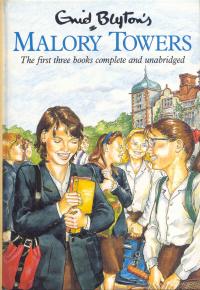
I'm throwing my hat in for Malory Towers. 


Image credit: Enid Blyton Society

Saturday, 14 November 2009

'Kathmeista Weekly' Top Ten


Publisher's Weekly released their Top 100 list this month and as a result have created quite a stir due to a complete and total lack of women writers in their Top 10 list. This despite Hilary Mantel winning the Booker for Wolf Hall, A.S. Byatt being nominated for the same award and literary giant Margaret Atwood releasing a new novel in September. They claim a lack of bias, gender or otherwise. I raise my eyebrows in a skeptical manner and say "Oh really."

After listening to Books on the Nightstand last night I decided that it would only be right and fair, given my skepticism, to have good look at my shelves and see what, if any, bias lurked there. Actually, its more to measure the extent of the bias as I know right off the bat that I have a strong preference for women writers. Just how strong was what I wanted to know.

As it happens, my bookshelves comprise (currently) 125 books - not a huge number but then I live in a not-huge apartment in Taiwan, so bear with me. Of those books, 39% were written by men, 60% were written by women and 1% were written by women under male pseudonyms. A strongly biased sample, yes - because frankly, I don't think it's possible to avoid bias in literature. It all comes down to taste after all and if mainly men are picking the lists, then I'm not surprised if male authors are winning the top spots. If it were up to me, I'd end up picking an almost all-female cast. Perhaps the gender balance of the judging panel should be re-examined.

In any case - it's just a list after all. It's a matter of opinion. My Top Ten is below.... what are your top ten books on your shelves?

'Kathmeista Weekly' Top Ten from my shelf (not just 2009):

1. Wuthering Heights by Emily Bronte
2. The Bell Jar by Sylvia Plath
3. The Color Purple by Alice Walker
4. The Time Traveller's Wife by Audrey Niffenegger
5. Eat, Pray, Love by Elizabeth Gilbert
6. Oryx and Crake by Margaret Atwood
7. On Beauty by Zadie Smith
8. Perfume by Patrick Suskind
9. Look at me by Anita Brookner
10. Forever Amber by Kathleen Winsor