Showing posts with label literary links. Show all posts

Saturday, 26 March 2011

Keeping my ear to the bookcase: Favourite book podcasts

Image credit here
A couple of years ago when I got an iPod and was introduced to the world of iTunes, I discovered this fantastic thing called podcasts. Of course they'd been around much longer before I came to know about them but this was an exciting new discovery for me. It was radio on demand! It was free! Excitedly, I typed in "books" into the search box and was astonished to find how many there were. I admit it. I went a little crazy and subscribed to thirty different podcasts forgetting of course that listening to podcasts was not my full time job and I had to sleep (terribly inconvenient) so after getting a tad overwhelmed I managed to trim it back to a few favourites. Here is a list of my top bookish listens:


BBC Radio 3: Arts and Ideas
Not exclusively about books per se but includes the interviews and reviews from all things artsy. Great for keeping up with global developments in the world of entertainment from a more academic point of view. Updates weekly.

BBC Radio 4: Books and Authors
What we all want: readers talking to the authors they love. This year they have interviewed Kim Edwards, Sebastian Faulks, Howard Jacobson and heaps more. Updates weekly.

Books on the Nightstand
Created and run by Ann Kingman and Michael Kindness who are both book sellers and major book lovers, this podcast is an absolute gem. They give great recommendations of "Two books we can't wait for you to read" every week and in the most recent podcast, Ann interviewed Ian McEwan. *Squeal!!* Also, they organised the War and Peace read-a-long that I'm participating in. Updates weekly and also has a blog associated with it.

Guardian: The Digested Read with John Crace
Hilarious podcast where John Crace reads the condensed version of well known books, including Lost Symbol by Dan Brown, The Protrait of the Artists as a Young Man by James Joyce and Train Spotting by Irvine Welsh. It's an eclectic collection! Irreverent, funny and good for a change of pace. Updates twice a week.

BBC World Service: Global Arts and Entertainment Podcast
Podcast about books, plays, films, art exhibitions and everything else related to the Arts from all across the globe. Fantastic for keeping abreast of things happening across the world, especially books that may not have come across your radar otherwise. Updates weekly.

The Guardian Books Podcast
When it comes to the Guardian Books Podcast I'm such a fangirl. Basically, I want to be Claire Armistead and Sarah Crowne. They have news and interviews about everything bookish and are great to listen to for updates on literary prizes, especially the Man Booker prize. Recent episodes I enjoyed were "Heroines and feminists", "Memory and truth" and "Writing and illness". Brilliant.

BBC World Service: World Book Club
The ultimate book club. Every month the author of a nominated book is invited in to answer questions put to them by the studio audience and selected others - you can email or phone in your question for the author. They have a great selection of authors: Barbara Kingsolver, Carlos Ruiz Zafon, Andrea Levy, Kiran Desai, Zadie Smith, Alice Walker and so many more. I literally hang out for each new episode. Updates monthly.

Do you listen to any books podcasts? Which are your favourites?

Thursday, 10 March 2011

Stuff that's tickled me recently... (4)

Ever since I was a kid, I've loved Enid Blyton books. I read basically all of them, some of them multiple times. So imagine my intrigue and excitement when I saw this article on an unknown Enid Blyon novel that that has been discovered! One more going on the TBR pile...

I found this through a fellow bookworm friend on Facebook. There are two posts, one about why it is better to date an illiterate girl and the other on why it is a good idea to date a girl who reads. I think we'll all be able to guess which post I agree with the most!! I do wonder what on earth happened to the author of the "Date an Illiterate Girl" post though. He sounds awfully upset at us bookish types...

Borders store in Auckland
Image credit here
Sadly it looks like the closure of Borders is going to strike a little closer to home than I'd hoped, with 38 stores closing in Australia. The word is at this stage that the Borders and Whitcoulls stores in little ol' New Zealand are safe, which is good but still. Not cool.

Finally, this was a fun article in honour of World Book night in the UK. The Guardian asks a bunch of fantastic authors which books they give as gifts and which ones they loved the best as presents. I think the coolest book I ever got was a recipe book in which each recipe was written in the style of a particular author, including Jane Austen. It was brilliant.

So what do you think happened to the person writing about not dating a bookish girl? Ideas, speculations and wild stories welcomed....

Tuesday, 15 February 2011

Stuff that's tickled me recently... (3)

Margaret Atwood, just
one of my many fave female writers
Credit
Gender imbalance in the literary world:
Following on from what Lionel Shriver was saying in the first Stuff That's Tickled Me about problems with having her books taken seriously by the powers that produce her book covers - this Guardian article looks at the gender imbalance reviews and reviewing in major literary publications such as London Review of Books, Granta and New York Review of Books to name a few.  Check out the statistics - the world of reviewing is clearly skewed towards men. I find that really odd considering most book bloggers who review books online are women... I wonder if it's because the reviews these publications publish are dominated by literary criticism from the academic domain. Anyone got any thoughts?

If I was going to get it,
this would be the one
Credit
Further to this debate, the Telegraph weighs in by commenting that despite 'literary hard-hitters' being overwhelmingly male, this may only be because women have only relatively recently been admitted to serious literary circles. They make a few good points though: the best selling author of this age is a woman (JK Rowling, represent) and the most important person in publishing is Oprah. So I'm certainly not about to start losing hope yet. Keep it up girls!! (As a side note, it's funny that all female authors are referred to by both first and last name whereas half of the men on the list are only referred to by last name. Seems like a really rugby team/military thing to do.)

The smell of books in a can:
Love the smell of books? I'm a self-confessed book-sniffer. I love the smell of books both new and old; I love the waft of literature and knowledge that hits you when you enter a library and this is one of the prevailing reasons I refuse to switch to an e-reader.... but apparently there's a cure on hand for those who have an e-reader and miss that familiar aroma. Book flavoured aerosol. I'm still not totally sure how I feel about this one....

Keeping on top of bookish news:
Undoubtedly a lot of you will already have heard of this one, but I'm a recent discoverer of the beauty that is Shelf Awareness. Great little e-newsletter about books, publishing and all of the sort of things we all love.

Are these the books our kids will be studying one day?
I came across this by way of One Person's Journey Through a World of Books and also saw a post about it from Sarcastic Female Literary Circle. Entertainment Weekly produced a list of the best reads from the 1983-today and deemed them to be the New Classics. The books that people would still be reading and talking about and studying in decades to come. I'm not entirely convinced by some of the inclusions on the list (Da Vinci Code a classic? Please say it ain't so!) but despite the potential longevity of these books it's a darned good reading list. I've knocked of twelve of them and about 10 more are waiting patiently for me on my shelves. How about you? How many have you read?


How to not look like a Twitter newbie:
As you all know, I'm a recent and enthusiastic convert to Twitter and despite my best efforts, I'm sure my first few weeks made me look like a complete newbie. This article about how to start on Twitter and not look green (that I found thanks to Coffee and a Book Chick) is slightly too late for me but I got some good tips from it. I changed my background from standard blue to something more 'branded'. I'm learning every day.

The cover in question...
Taipei International Book Expo 2011:
In some local news, the Taipei International Book Expo has just been here. This article from Publisher's Weekly is a glowing report of the positivity abuzz there. Much to my chagrin, this one did not show up on my bookish stuff radar until too late. I promptly set up and alert for it on Google so in 2012 I'll know about it in advance. For a insider's view of what happened there, check out Shu Flies' overview post.

Caption competition fun:
Finally, a funny one. I came across this caption competition for the cover (see right) of Female body in Medicine and Literature. Some of the suggestions had me in stitches (pun intended). Enjoy!

Monday, 14 February 2011

Battle Hymn of the Tiger Mother: Review

Battle Hymn of the Tiger Mother
By Amy Chua
Published by Bloomsbury
Published in 2011
ISBN: 978-1-4088-1316-4

I purchased this book myself to see what the fuss was about and was not paid for this review.

Dichotomies are a dangerous thing. Us versus them, East vs West - it's not a story that ends well for anyone. Not to mention that most of the time it's patently untrue. One thing I've learned in life so far is that no matter which two cultures you're comparing, you're just as likely to find similarities as you are differences. Which is not to eschew cultural difference and try and make everyone the same which is equally as dangerous but it's a plea for middle ground - not a concept that I think Amy Chua is overly familiar with.

She started writing this book as a comparison of Chinese parenting to Western parenting and although she says in the first few pages that you don't have to be Chinese to be a Chinese mother and many mothers of Chinese heritage aren't Chinese Mothers at all, the label remains. You can couch all you like but if you call a spade a spade, that's the name that is going to stick. Personally, I would rather call this style of parenting "Extreme" rather than "Chinese." And if she thinks that Western parenting is all about choice, freedom and liberty I would like to firmly tell her that no, trust me, that really isn't always the case. But that's another story.

That said, Amy Chua is not a cultural anthropologist and this was not designed to be a parenting guide. It's a memoir, pure and simple. It's one mother's story of how she raised her kids which turned out to work brilliantly for one daughter but was a terrible idea for the other. And she knows it. She started writing this book the day after her thirteen year old daughter screamed abuse and smashed glasses in the middle of a restaurant in Russia so the whole way through the point she was driving at was 'boy did I learn a lesson.' I'll bet she did. For all her claims of being a Chinese mother, her second daughter Lulu seemed vastly disrespectful to her mother. Maybe it's just me, maybe its because I don't have kids yet and I have no idea but I'd never have given my mother the cheek Lulu gave hers and if my daughter gave me that sort of cheek I'd be devastated. Check in with me in a decade or so and I might think differently.

(L-R): Lulu, Amy and Spohia
Erin Patrice O'Brien for The Wall Street Journal
A lot has been made of the extremity of Amy Chua's mothering. Yup, it is extreme. Jaw-droppingly so at times. The oft-quoted examples of how she forced her younger daughter to play for hours without a toilet break, called her older daughter garbage and rejected handmade birthday cards are all there. But when you read them in the context of the book, you understand a little better. This is a woman who is manically intense and knows it. She knows that writing this kind of thing down would get her some serious attention of the negative kind. But she still put it out there. She was honest. She didn't sugar coat it. And while I really disagree with her method I have to admire her courage.

What's good about the way she does things? Well, quite a lot actually. If someone with a better temperament had taken the approach she had, it probably would have been a far easier read. You see, the things that she's proposing by and large aren't terrible. For example, she said that you should instill in your kids that you think they can do more. Expect the best. Push them to succeed. Teach them the value of hard work. Get alongside them and practice with them. The point that Amy missed as her kids were growing up? When to step back. The ability to see when she's being more of a hinderance than a help. But just because she was a little over the top doesn't mean that these points are invalid. I think it's a great thing to assume strength in your child rather than assume fragility. It's good to spend time with them helping them to achieve goals. It's good to teach them that raw talent is one thing but without hard work it's not going to get you very far.

Life is tough and the job of parents is to prepare their kids for it the best they can. Amy Chua was doing the best she could and when she (finally) realised her method of mothering Lulu wasn't working she did adapt. Somewhat. But one method does not work for all kids and even within one family I often see parents adapting their styles to the personalities of their children. It's one heck of a job and to all of the parents out there who do it, putting your heart and soul into your kids, giving them the best of yourself every single day I am in awe. When I think of the future generation, I don't wring my hands and wail because I look around at my friends who are parents and see what a fabulous job they are all doing and I know we're going to have some great leaders in the future. They're going to get there by different roads but when they do they'll be incredible.

A lot of things have been written about this book in the media, starting with this article. As is usually the way with media hype, a lot of it is just that: hype. Amy Chua is not a menace to society. She hasn't abused her children. Maybe she hasn't done it the way a lot of folks would have but she did her best and she told us her story of how it happened. If you want to know the real deal - read the book. It's a very entertaining and pretty fast read of how one mother came to realise that her method of mothering needed to be adapted and changed before she lost her daughter altogether. I'm really glad she learned that lesson because a mother driving away her daughter for the sake of stupid pride is one of life's greatest tragedies.

Now we wait for the memoirs of Lulu. That'll be an interesting book.

Other reviews of Tiger Mother:
Wallace at Unputdownables
Catherine at Shu Flies
Kim at Parenting Book by Book
A Kindle in Hong Kong
Flower Patch Farm Girl

Friday, 4 February 2011

Stuff that's tickled me recently... (2)

E-Book on an iPad
Credit Here
E-Books increase people's reading time:
A recent study from iModerate Research Technologies and Brock Associates has found that people who have a MFD (Multi-functional device) with them basically all of the time now read more as a result of always having a book with them in electronic form. And not just one book either - they can have a huge number of titles in their bag with them thanks to e-books. They're generally reading at times when I myself would pull a book out of my bag and sneak in a few pages - on the bus, waiting for an appointment etc - except now they don't have to be a dedicated bookworm who carries books around with them specifically for these times. They just happen to have them already. While I'm not personally an e-book reader (I just can't go past a hard copy book) I have nothing against them and in fact cheer them on heartily if it means that people are now reading more. I'm all for that!

From E-books to Vooks:
Now this is something funky - Vooks. Apparently these are basically e-books on crack, the souped-up version that include interviews, video clips, the whole multimedia experience of what was once a humble books, 300 or so pages of the printed word. I'm not entirely sure if I think this is a brilliant idea or if it's a bit gimmicky. I guess time will tell.

Toyo Shibata
C
redit: Reuters/Asukashinsha/Handout
It's never too late:
Now this is one for the inspirational files - a 99-year old Japanese grandmother, Mrs. Toyo Shibata, has just sold 1.5 million copies of her first book (self-published) of poetry. She turned to writing poetry when she had to give up dancing at 92 years old. (92! I'll be chuffed to still be kicking around at that age, much less worrying what  I should do with my time now I have to stop dancing!) Now, at 99, her poetry book is selling like hotcakes. Just goes to show it's never too late to have a crack at something. I take my hat off to her.


Yann Martel
Credit: Yann Martel


Man on a mission:
Yann Martel, best known for his Booker Prize winning The Life of Pi, has spent the last four years and 100 books trying to educate the Canadian Prime Minister on the joys and value of literature. He's quoted in the article as saying "We've become slaves to our work and have forgotten that it's in moments of leisure and stillness, when we're free from working with a hoe or at a keyboard, that we can contemplate life and become fully ourselves."While I know nothing about the Canadian PM or Canadian politics in general, this is totally an endeavour I can get behind. I'm all for getting people hooked on the joys of reading and helping those in charge of the purse strings value the arts in general. Without the arts, what do we have? When our descendants look back at us it's not only the business successes, the architectural achievements or technological advances they will care about. They'll (surely) want to know more about us as a people, want so glimpse inside our minds and souls. Where better to capture that than in our literature and film? 

Bibliotheca Alexandrina at night
Credit here
Keeping the libraries safe:
Despite massive unrest in Egypt and demands for out with the old and in with the new, this doesn't apply to the books at Bibliotheca Alexandrina which is being protected by organised groups of the city's youth. For all of the despairing head shaking that usually goes on about 'the youth of today' I think it's fair to say that Egypt, at least, doesn't seem to have much to worry about. Good on you, guys! Keep up the good work.

Saturday, 29 January 2011

What next? How I find my next read.

My current TBR pile!
I don't, and never have had, any trouble finding the book I want to read next. I seem to be surrounded by a perpetual and ever-increasing pile of books ll vying for my attention. As it is, I'm in a habit of reading about 3-4 different books at the same time, which some people find hard to fathom but I'm sure some of you will understand - I know Sheila from Book Journey will if this post is anything to go by!

In any case, I saw this Guardian article from a couple of years ago about a fun little website called The Book Seer. If you type in the last book you read and enjoyed, it will generate a list of recommendation through Amazon and LibraryThing for you to choose from. As Chris Powers notes, it's unclear on what factors (genre? author?) recommendations are generated but it is a bit of fun and hey - I'm all for reading things I wouldn't necessarily have done otherwise. It's a fact: there are far too many books and not enough time and one person could never know about all of the great books in the world.

Then I started wondering - how do I really find my next book? There's obviously the required reading schedule that comes along with writing a thesis, loads of theoretical articles, literary criticism and what not but a girl needs a bit of 'fun' reading, doesn't she! A bit of elicit "this isn't going to get me credit but I don't care" reading. I came to the conclusion that it was Bookcrossing, book club and blogging that were most responsible for my massive TBR pile. The fact that no one person can know even a fraction of all available good reads out there is one of the key reasons I spend so much time reading other people's blog and listening to podcasts about books. It seems to be my life's mission is to consume as much good literature as I possibly can without becoming a hermit or going blind which so far is going reasonably well (bad eyes notwithstanding!) but I know I could always read more and at the rate at which books are published I have to accept I will never keep up. But it's fun trying!

How do you find your next read? Do you even think about it, or do you (like me) have a constant pile of books waiting for you that just seemed to magically appear? I'd love to hear from you!

Friday, 21 January 2011

Stuff that's tickled me recently...

I signed up to Twitter a couple of months ago, tweeted once and the abandoned ship for a while. I have revisited it in the last week and started my tweeting journey in earnest. Currently I have 12 followers and counting... I have found that it's something you have to keep on top of if you want to get value out of but so far I'm finding it a great way of keeping abreast of literary developments and other fun bookish things. It's also the main source of the rest of this post. Hoorah for Twitter!

The 2011 Tournament of Books is something I hadn't heard of previously. It takes a list of books that were big news in the previous calendar year and and panel of judges work to select the best one. There are 2 really cool things about this award that sets it apart for me. One, the judges have to explain their choice and lay bare their biases and leanings. Two, we, the common folk, get a say. You can vote for your favourite of the bunch and if it gets eliminated earlier on it can be revived in the Zombie Round! Nice. In the interests of full disclosure, I voted for Room by Emma Donoghue, but there's loads of great books on the list including my current read, The Finkler Question. 

Here Lionel Shriver, author of award winning We Need to Talk About Kevin (among others), talks about the hilarity and head-banging frustration of publishers cover choices for her books. Really, it's a critique of the Old Boy's Club within the literary world that still exists despite the vast majority of writers being women not to mention women making up 80% of the fiction buying market. Eighty percent!! Why then do fantastic writers like Shriver get the short shrift on cover choice, trying to make her hard hitting unisex fiction look soft and feminine just because a she is a female writer? I don't hav the answers to that one but I think anyone who can come up with this fab quote: "trussing up my novels as sweet, girly and soft is like stuffing a rottweiler in a dress" deserves MUCH respect.

Smart Bitches, Trashy Books. Oh. My. Goodness. WHY have I never read their blog before? I was laughing so hard at some of their posts in the greatest hits section that my doggy started barking at me! More maniacal giggling then ensued. The basic premise of this blog for those who don't know (and I really might be the last one to find this but hey, just in case) is that the two women are smart girls who love to read romance novels and review them. I'm not a fan of romance at all but you don't need to be. The fun is in reading what they write about these books and how they write it. Genius. Check it out if you didn't already. 

Also, I found this stroke of brilliance through SMTB. Enjoy.


Finally, I'm fairly sure I have made my feelings about the Twilight series clear (in short: terrible, terrible writing but if kids are reading it's not all bad). So then I found out that the favourite book of the 2 characters of Bella and Edward is in act my own favourite: Wuthering Heights. I was unsure of how I felt about having anything in common with these characters, least of all my all-time favourite book! However, according to the Guardian, the fact that Captain Shiny Skin and Little Miss Glum love this book (plus a clever rebrand to make it look Twilight-esque) has sent sales of Wuthering Heights through the roof and it is topping the classics bestsellers chart. Now if only the kids that are buying the book actually read it and realise what real literature is. Am I too idealistic? Perhaps. Well, at least they own it for future reference...

Photo credits: Lionel Shriver - BBC
                Wuthering Heights cover - Guardian

Monday, 13 September 2010

Are you a Lone Reader?

I came across this BBC article a couple of days ago and it got me thinking about reading. Back in the days of yore, folks used to gather around campfires and entertain each other by telling stories but the advent of the industrial revolution and capitalism boiled this love of stories down into the individualised package that we know and love today: the novel. Ostensibly, this made reading an individual endeavour - if you've ever tried to co-read a book in a short-resourced English Lit class in high school, you will know why - but the social aspect out of sharing our stories is still very much there.

Reflecting on my own reading practices, I realised that while yes, much of what I read, I read alone I would KILL for someone to read a book to me. Or pay for it through the Audiobooks section of iTunes. As a kid my father read all sorts of classics to us, including all three books of Lord of the Rings. For a bloke who worked a 10 hour day that's some achievement. Hearing the story in your own voice in your own head is great but hearing it from someone else can add dimensions to it that you might not have thought of, like how Gollum sounds when he coughs or the pure terror of the Black Riders.

Perhaps my love of reading aloud also comes in part for my penchant for the sound of language. The beauty of a well-written sentence can't be underestimated. It's when it is spoken that words are most alive - light bounces off them and illuminates dark corners of previously unexplored ideas. I really could wax lyrical here about this but I'll spare you more details. Safe to say I'm a major language geek and prefer to hear poetry rather than read it.

My third and final point proving that I'm totally a social reader: book club. Nothing and I mean nothing gets me more animated than talking about books. When I have a mug of coffee in my hand, a slice of cake on my plate and several good friends all in the same place talking about the same book, I'm pretty well in heaven. In fact, if heaven does not have a good library and book clubs, I really don't fancy going there. Also the fact that I write on here about books proves that I'm a social reader. I want to put my thoughts out there and see what other people think too. Blogging is, in a way, a huge book club meeting online.

So yet again, I'm keen to know what you think. Are you a Lone Reader or a Social Bookerfly?

Saturday, 20 March 2010

The Girl with the Dragon Tattoo and Feminism

When it comes to over-hyped books I am the Ebeneezer Scrooge of readers. Bah humbug, I declare. You won't catch me reading that! I proceed to shun said hyped book until it has been forgotten by the rabid media dogs or it gets proven to be a genuinely good book by those with a half-decent opinion of what a good book looks like. Some might call me a book snob, but I just know what I like to read and don't fancy wasting X amount of hours on a book just because everyone else is reading it unless it's actually worth it. If you could see the size of my "To be read" pile you'd understand.

The Steig Larsson trilogy were firmly in the "Over-hyped" category for me so I decided to wait until the melee calmed down. Once it did and it was voted in as the April Book for our bookclub, I thought what the heck and bought it.

On the surface, I thoroughly enjoyed it. It kept me amused through two long and tedious flights from Hong Kong to Sydney and back again which is a fair achievement as planes are one of the only places on earth I find it nearly impossible to read (or sleep, but that's another story). It absorbed me. It scared me. It grossed me out. It was, all in all, a damn good thriller.

But there was something bugging me about it... Each new section of the book was marked with some proclamation about violence against women, for example Part One states that "eighteen percent of the women in Sweden have at one time been threatened by a man." Which made me think that the late Steig Larsson must have something to say about violence against women, but throughout the book the women were subjected to an near unbelivable amount of horrific violence, both physical and sexual. Something didn't sit quite right for me.

Indeed, I'm certainly not the first to point this out. A quick search of reviews showed that this issue has divided critics between claims that Larsson was a closet mysogynist and those who believed that Lisbeth Salander was a sort of feminist avenging angel that righted the wrongs of those who were abused. This article discussing these claims got me thinking.

Photo Credit: Here
Having studied feminism and long been a feminist I wanted to throw my hat into the ring. I don't want to accuse Steig Larsson of being a closet misogynist exactly but I think the problem is that this book doesn't entirely understand the truth about violence against women. Although there are undeniably psychopaths out there who do unspeakable things, the majority of violence against women is not perpetrated by these sorts of people. Those who beat, rape and intimidate women are, on the whole, not crazy - they're your average Joe Bloggs who come across as being very nice and normal sorts of people. Absolutely, they're the scum of the earth but they're not lunatics. On the whole women are not tortured in custom-built basements but in the spaces where you and I live out our daily lives.

By choosing to portray men who are violent towards women as psychopaths is essentially unhelpful. It hides the truth of the situation all over the world and does nothing to make us question why it happens and why nothing more is done to stop it. Lisbeth Salander is without question an ass-kicking woman who takes matters into her own hands but her actions are unrealistic. It's a cathartic read but she is the stuff of fantasy.

I wonder whether choosing the way this story played out was politically based or driven by what would make a 'better story'. Domestic abuse is not sexy in the same way as a serial psychopath with incestuous tendencies is - it's a depressing reality. Although the women who have survived the abuse and violence in this book do seem to get their revenge, I don't think that this book can be seen as feminist. It is too far outside the realm of reality and plays into the hands of necessary genre cliches. Women who have suffered the day to day actuality of abuse are offered nothing of use other than a few hours of escapism into a world where the normal rules don't apply and 'avenging angels' can inflict justice on the monsters of this world. The Girl with a Dragon Tattoo is a ripping read but nothing more.

**If you or someone you know is being subjected to any kind of abuse, please call your local Women's Shelter, Rape Crisis Line or relevant agencies.**

Sunday, 24 January 2010

When something a bit fun becomes AWESOME!

Not so long ago, I wrote a short post about the World's Smallest Library in Westbury-Sub-Mendip in Somerset, awarding these good folks my inaugural Most Awesome Village award. I didn't think much would come of this post but then I got a comment from a local of this very village who lived within yards of the library in question. How fun is that? Here I am in Taiwan, tapping away on my laptop about this place and I get a reply all the way from South England!

Anyway, given that I heard about this place on the forums on the Bookcrossing website, I asked Andrew (the cool local) if he knew about Bookcrossing and if so, could I send a couple of books over from Taiwan to put in the library. He kindly agreed and I posted off a couple of books from my bookshelf for someone else to read and enjoy.

I casually mentioned this on the bookcrossing forum where this had all started and was suddenly overrun with messages from people who also wanted to send books to this library - bookcrossers from the USA, Scotland, Cornwall, the Netherlands and Canada - it seems that this whole idea had captured the hearts and minds of bookcrossers internationally and they wanted to be a part of it. Now Andrew is a fully signed up member of bookcrossing and receiving books from all over the place - goodness knows if it gets to be too much more of a phenomenon they may need to locate and convert a second phonebox!

Photo credit: Bob Dolby

I love this kind of thing: blogging and Bookcrossing bringing people and books together no matter where you are. It makes life more interesting and the global community just a touch smaller and more connected. Three cheers for Westbury-Sub-Mendip and for Bookcrossing!

Links:
My postcard on the village website

Sunday, 10 January 2010

Something a bit fun...

Image Credit: Bob Dolby

I came across this on the bookcrossing forums and thought that it was just too good not to share. The good folks in the village of Westbury-sub-Mendip, near Wells, Somerset came up with a fantastic use for their decommissioned red telephone box. They turned it into the world's smallest library, a place where locals can bring along a book and swap it for another already on the shelves. What a wonderful idea - and kind of fun, given that despite the upgrades in technology the good old book is still going strong. These folks sure win my vote for Most Awesome Village.

Image credit: Bob Dolby

Wednesday, 6 January 2010

Helping out the 'little guys'


It has oft been said that smaller, independent bookstores are finding it harder and harder to survive due to the ever-present larger chain stores that can offer the same book at discounted prices that the smaller stores just can't afford. It's a crying shame and many a good independent bookstore has had to close its doors as a result. It's hard to walk past a bargain though - human nature makes it hard to resist saving that extra $5 for a matter of principles. Thankfully, living here in Taiwan I'm not quite so riddled with guilt for not buying books from my local bookstore as they don't carry any English language books so I have to buy them from the larger chains like PageOne. Mind you, if I'm ordering from online I do try and use Better World Books or Good Books NZ as they're doing good work for worldwide literacy and Oxfam respectively.

In light of the constant struggle for survival that smaller bookstores face, this story from the Guardian was a real heart warmer and proof that those in charge of some of the larger chains are human after all and not just about the bottom line. Turns out that Lingham's, an independent store opposite UK retail giant Tesco, successfully appealed to the head honcho of Tesco to advertise the fact that their store carried many titles that Tesco didn't and were able to provide a more in-depth book-related customer service. I can hardly believe that Tesco went for the idea but certainly very glad they did. Good on them. By helping out the 'little guy' they surely won't be hurting their profit margin. Who knows. The good karma might even pay PR dividends when people are trying to figure out which supermarket to get the weekly shop from.

Inside Lingham's. 
Image credit: Rambles from my Chair

Good on you Tesco. You've made the world a slightly better place.

Saturday, 2 January 2010

The brain, reading and language...


This article over at the NY Times got me thinking this evening as I sat comfortably on our couch, stuffed full of homemade tortillas and the last of the bubbly wine from New Years. It started a catalystic process and bought together a few ideas that have been lying around for a while waiting to be a quasi-intelligent blog post around the ideas of reading and language.

Reading, according to the book at the centre of the article in question, is not something our brain was evolved to do, which given the voracity with which the majority of us consume information visually (books, internet, signs, menus...) is quite something. However, it seems that the reason that we do despite this fact is that our brains are nothing if not adaptable little buggers that will have a crack at most anything and rise to any occasion. So much so, it seems that the brains of each successive generation are markedly different to the previous ones - quite something to get your head around if you'll excuse the unintentional pun.


Another thing the book talks about is the arbitrariness (or not) of words. As it says in the article:

"In one of the most interesting chapters, he argues that the shapes we 
use to make written letters mirror the shapes that primates 
use to recognize objects. After all, I could use any arbitrary squiggle 
to encode the sound at the start of “Tree” instead of a T. But actually 
the shapes of written symbols are strikingly similar across many languages.
It turns out that T shapes are important to monkeys, too. 
When a monkey sees a T shape in the world, it is very 
likely to indicate the edge of an object — something the monkey can grab 
and maybe even eat. A particular area of its brain pays special 
attention to those significant shapes. Human brains use the same 
area to process letters. Dehaene makes a compelling case that 
these brain areas have been “recycled” for reading. “We did not 
invent most of our letter shapes,” he writes. “They lay dormant 
in our brains for millions of years, and were merely rediscovered 
when our species invented writing and the alphabet.”

If I haven't completely missed the mark here, and do keep in mind that leftover bubbly already in my system, then it sounds like Dehaene (the author of the book on reading and neurology) is saying that there is some connection between the physical shape of words and their meaning, something which directly contradicts the theory of Saussure who claimed that "the connection between the signifier (the word) and the signified (the concept for which this word stands) is arbitrary."

This is where my own jumbled musings come in - before I had the opportunity to make the acquaintance of the Chinese language I would have heartily agreed with Saussure, whom I studied in the first year of my Masters in the dreaded literary theory class. Logically, it seemed there was no more reason that "cat" should signify the fluffy, occasionally demanding domestic creature that goes meow anymore than the word "bleft" should. It just seems that the word cat was chosen and for some reason, stuck. Then I started to learn to read for the second time in my life and found that this theory didn't always necessarily hold true. There  are a few choice examples from written Chinese I'd like to point to:


This first one means middle. A line through the centre of a box - you can see how this means middle.

This one means tree and looks like a tree too!

These two words, separately, mean woods and forrest. The one with 2 trees is woods and the one with 3 trees means forrest (more trees - bigger - forrest). Again - it just makes sense!

Finally, this one means big - imagine a person stretching their arms to describe a fish they caught - "It was thiiiiiiis big!"

There are others of course and in turn, not all chinese words look like their meaning, but enough of them do to make me wonder what Saussure would make of this. It's just a mild curiosity I've been nursing for a wee while and this NY Times article kind of brought it all together for me. Maybe the written language isn't so arbitrary after all? How can it be - we are after all creatures who crave meaning and pattern so language surely must have developed from this desire in some way.

In any case, I think that's about the extent of my linguistic musings for this evening. It's far too large a subject area for me to tackle with any seriousness and I don't claim to be anything but an interested observer - reading a few articles here and there surely doesn't make you an expert. It's fun to speculate though! Any thoughts?

Saturday, 21 November 2009

Where do you draw the line?

Earlier this year I read In Cold Blood by Truman Capote. It was recommended to me by a good friend who had just finished reading it and loved it and sure enough, I also really enjoyed it. Hmm. Maybe "enjoyed" is the wrong word. It's hard to 'enjoy' the unblinking account of how two society drop-outs come to brutally murder a decent and community minded family of four... Let's just say I was gripped by it. I could not put it down nor could I read anything else until I knew how it all ended.

What made it such a compelling read? Partially, of course, Capote's writing keeps the reader involved but I think the main driving force behind this book is the fact that it is real. This happened - the facts are all real (although there is some controversy about the accuracy of Capote's reporting on some details). Capote read about these killings in the paper and immediately packed up his suitcase and went out to Holcomb, West Kansas to cover this story. This Guardian Books article looks at this case which happened fifty years ago this month - it's a cracking read, so I recommend you check it out.

Truman Capote
Image credit: Here

The article got me thinking though. It mentions that although some townspeople were happy with the book and its epic success (millions of copies sold and four movies made), there were plenty that were not. As a result of the popularity of the book and it's movie spinoffs, there has been and will undoubtedly continue to be a steady stream of people from all over the world coming through to see the place where it all happened. Bobby (now Bob) Rupp, the then-sixteen year old sweetheart of Nancy Clutter, now 66 year old father of four, grandfather of eight, stated his displeasure with the books and movies, which incidentally he has never read nor watched and never will, as he felt that this attention has made people only focus on the fact of the Clutters' bloody demise rather than on what they achieved as people during their lives.

This and the ethically thorny issue of profiting from re-telling someone else's misery are commonly raised when literature deals with tragedy and disaster. Even though I haven't even started writing it yet, I have come across this in my thesis about post 9/11 literature. Some people have reacted angrily to those who wish to portray the events of that day through any media - be it literature, in films, through photography... And this is understandable. For those suffering the loss of someone, their grief is a very personal experience and any intrusion into the sacred space of the memory of their loved one be it direct or indirect is intolerable. However, for events such as 9/11, there is another grief at work: public grief. This grief is predicated on not personal loss but societal loss, the collective trauma of seeing, time and time again, from various angles the planes flying into the towers and their subsequent collapse, knowing we were watching people lose their lives. There's also the grief for the loss of a sense of security and loss of stability.

Image credit: photographer unknown

To work through a collective trauma it seems that representations of the event are necessary, but that doesn't mean that those who feel intruded upon are likely to be any more understanding. It seems to me to be a necessary evil, that these events must be memorialised and entrenched into our history through the written word and film. Because, as painful as it is that these things happened and though we may wish we could, we cannot and should not forget them.

I have to wonder about In Cold Blood, though. Was it necessary to have this gruesome murder written so definitively into America's history?

What are your thoughts on this? What do you think of representations of human tragedy and disaster? Historically and socially necessary or ethically and morally questionable?

Monday, 16 November 2009

The Beeb banned Blyton??!

Enid Blyton
Image credit: Here


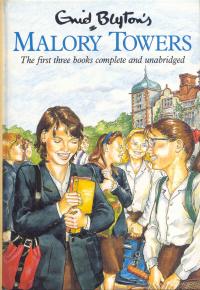
As a pint-sized bookworm I read whatever I could get my hands on but majority of what I cut my literary teeth on as a nipper were the many and varied works of the one and only Enid Blyton. I fantasized about being in the Secret Seven, I wished I went to school at a boarding school and I have a vivid idea of what Toffee Shocks, Pop Biscuits and Google Buns taste like. I absolutely worshipped Enid Blyton. 


So when I read this article on Stuff.co.nz I was agog. The BBC banned Enid Blyton?! Apparently it was because her books didn't "have enough literary value". Literary value? Seven year olds were reading this, not uni students! Her books were ripping good reads and gave many a child an outlet for their "let's get away from the parents and roam the moors" daydreams (or was that just me?) At least, according to the article, some of her work was eventually featured on the BBC - a mere 5 years before her death. It's a little too late but it's something, I guess. 


I suspect that if I were to revisit some of these childhood faves now they will have lost some of their magic (blast being an adult!) and apparently dear old Enid wasn't exactly the nicest person alive, but all the same. These books have shaped not only my childhood but the childhoods of millions of children all over the world.


Did you read Enid Blyton? If so, what was your favourite book/ series from her? Vote in the poll!


I'm throwing my hat in for Malory Towers. 


Image credit: Enid Blyton Society

Saturday, 14 November 2009

'Kathmeista Weekly' Top Ten


Publisher's Weekly released their Top 100 list this month and as a result have created quite a stir due to a complete and total lack of women writers in their Top 10 list. This despite Hilary Mantel winning the Booker for Wolf Hall, A.S. Byatt being nominated for the same award and literary giant Margaret Atwood releasing a new novel in September. They claim a lack of bias, gender or otherwise. I raise my eyebrows in a skeptical manner and say "Oh really."

After listening to Books on the Nightstand last night I decided that it would only be right and fair, given my skepticism, to have good look at my shelves and see what, if any, bias lurked there. Actually, its more to measure the extent of the bias as I know right off the bat that I have a strong preference for women writers. Just how strong was what I wanted to know.

As it happens, my bookshelves comprise (currently) 125 books - not a huge number but then I live in a not-huge apartment in Taiwan, so bear with me. Of those books, 39% were written by men, 60% were written by women and 1% were written by women under male pseudonyms. A strongly biased sample, yes - because frankly, I don't think it's possible to avoid bias in literature. It all comes down to taste after all and if mainly men are picking the lists, then I'm not surprised if male authors are winning the top spots. If it were up to me, I'd end up picking an almost all-female cast. Perhaps the gender balance of the judging panel should be re-examined.

In any case - it's just a list after all. It's a matter of opinion. My Top Ten is below.... what are your top ten books on your shelves?

'Kathmeista Weekly' Top Ten from my shelf (not just 2009):

1. Wuthering Heights by Emily Bronte
2. The Bell Jar by Sylvia Plath
3. The Color Purple by Alice Walker
4. The Time Traveller's Wife by Audrey Niffenegger
5. Eat, Pray, Love by Elizabeth Gilbert
6. Oryx and Crake by Margaret Atwood
7. On Beauty by Zadie Smith
8. Perfume by Patrick Suskind
9. Look at me by Anita Brookner
10. Forever Amber by Kathleen Winsor

Sunday, 8 November 2009

I'm sorry Mr. Roth, but I have to disagree


Philip Roth. Photograph: Orjan F Ellingvag / Dagbladet / Corbis


I saw this article about 10 days ago but didn't have the chance to properly comment on it until now for one reason and another. I just haven't been able to stop thinking about it though because I disagree so very strongly with it.

It's not often that I find myself in disagreement with great authors and people I hold in very high esteem but I guess there's always an exception. Basically, Philip Roth, the American writer who has written around 30 novels and been awarded numerous literary awards has said that he thinks that within 25 years the novel will have become a fringe cult, something only enjoyed by a select few. And that's an optimistic time frame, he thinks, due to the mass onslaught of media these days. With options like the movies, the internet, iPods and suchlike who'd want to pick up a humble book?

Well, me, for one. But I very much doubt that I will be the only one. The one thing that convinces me most strongly about this is what I see every single time I walk into a book store here in Taiwan. Taiwan is arguably one of the most technology-saturated nations on this planet - more than half of the population at any given time seems to be "plugged in" in one way or another and yet what do I see when I walk into the bookstores? Hoards of people with their nose buried in a book. Never before in my life have I had to pick my way along the aisles of a bookstore so carefully - folks here think nothing of finding themselves a wee corner and tucking into whichever book they happen to have picked up - the place is strewn with reading bodies! Moreover, when I catch the train into Taipei, half of the carriage is reading something, more often than not a novel.


Image credit: Here

How, then, can this claim that the novel is going extinct be true? It has survived the advent of the radio, the TV and the internet. In actual fact, the internet has probably done more to promote and facilitate the activity of reading through the invention of blogs and websites such as Bookcrossing. Book blogs abound out there, all of them written by avid readers who would choke on the very idea that books and reading could ever be pushed aside by technology. In fact, for a laugh I googled "book blogs" and "technology blogs" and found that the book blogs outweighed their technological cousins nearly 2:1. It's not a scientific study, but it's an interesting indication.

I guess the thing I found the worst about this claim was that Philip Roth is one of us - one of the bookworm club - and here he was, seemingly attacking the thing we all love the most. Maybe he was having a bad day. Maybe he was having one of the post-publication panics he talks about in the article. Who knows? One thing is for sure though - I look forward to being around 25 years from now and seeing the printed word still going strong.

What do you think? Do you agree with Roth or do you think the novel will prevail? Add a comment or vote in the poll!

Saturday, 24 October 2009

Books to movies.... always bad?


"Hollywood, in particular, seems to be like an exocet missile to hone in on whatever was good in a novel and remove it, destroy it and then proceed from there."


So said Robert Harris who is the author of many books (most recently Lustrum) on BBC Radio Five Live's Book Reviews with Simon Mayo.* From what I could gather, it sounded a lot like he'd had some very bad experiences of people adapting his work for the big screen - as have many other authors. Audrey Niffenegger, author of one of my all-time favourite books The Time Traveller's Wife was also on the same programme. She commented that she had been advised to completely let go of all artistic control when TTTW was adapted and as a result hadn't even been to see the finished result. This was particularly because the movie is not her book and you can't unsee what you have already seen - the memory of the movie will henceforth always taint her experience of the book.

It's for this very reason that I haven't gone to see TTTW in the movies - I loved this book and for me it lives in my memory as a place I can revisit when I next read the book (and I know I will) and I just don't want anyone else's idea of what the book looks like getting mixed up in all of that. Reading a book, after all, is a very personal experience. The settings of the books, the voices of the characters, the atmosphere of the places - you and the author have created that together just for your enjoyment. Nobody else ever sees or experiences the novel in exactly the same way, which is one of the great joys of literature. If you go to the movies with a friend, however, you know that they have seen exactly the same thing that you have seen.

Don't get me wrong, I'm not beating up on movies - I'm actually a great fan of them and very much enjoy watching a good film. It's just that they are two completely different mediums and I fear that something is always lost when the two worlds collide. There has only been one time that I have ever watched a movie adaptation of a book and not been disappointed by it and that was Peter Jackson's interpretation of Lord of the Rings. But even then - his vision of Mordor, whilst fantastically dark and horrifying, was not the same as my vision of Mordor. And so, a little something is lost - now I can only ever see Jackson's Mordor when I think of this novel.

Ultimately I'm not here to wax lyrical about whether the page is mightier than the silver screen. The choice here is not black and white and one is not better than the other, in my opinion. I just personally believe that if you really enjoyed a book and have a strong personal connection to it, it is wise to think twice about watching the movie adaptation of it.

What do you think? Have you ever seen a movie adaptation that ruined your enjoyment of a book? Or, have you ever seen an adaptation that improved a book? I'm keen to hear your thoughts!

* This quote was taken from the podcast released on 15th October 2009. Podcast is available through iTunes or the BBC World Service website.