Showing posts with label book club. Show all posts

Tuesday, 28 February 2012

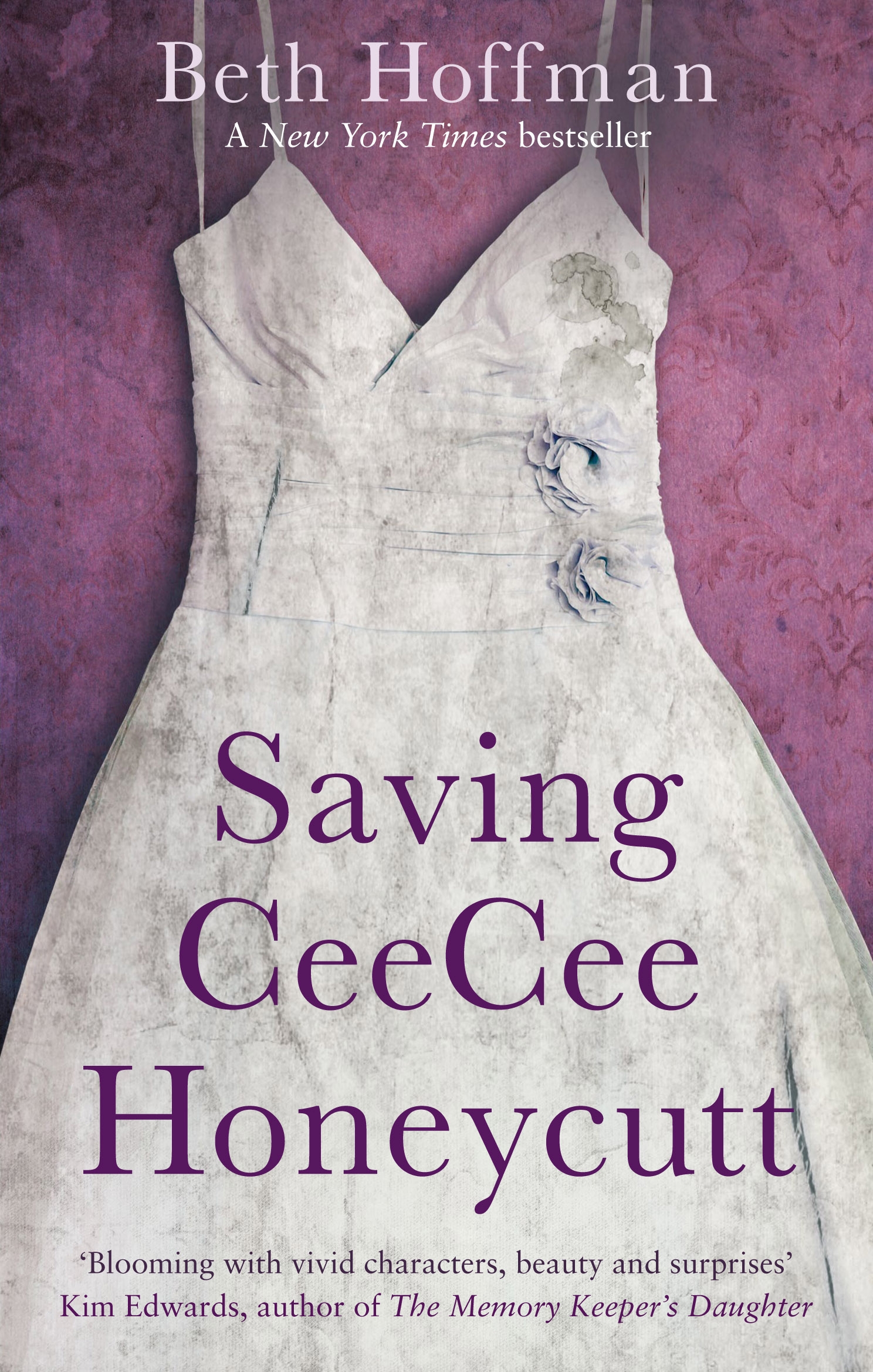
Saving CeeCee Honeycutt: Review

Saving CeeCee Honeycutt
By Beth Hoffman
Published in 2012
Published by Abacus
ISBN: 978-0-349-00018-3
(Great Britain edition)

Some of us jokingly worry about turning into our parents.  It might sneak up on us one day as we are scolding our kids, or during a conversation with friends all of a sudden something will pop out of our mouths that sounds exactly like them.  The echoes of our parents' influence may be unexpected, but for most of us it wouldn't be unwelcome.  But for CeeCee Honeycutt, recognizing echoes of her mother within herself is her worst nightmare, and something which has haunted her every day since she read in a book that psychosis may be inherited.

CeeCee has grown up as the sole caretaker for her irretrievably mentally ill mother.  Her father, unable to face up to the realities of his marriage, has retreated into his work and is barely ever home, leaving CeeCee to bear the brunt of her mother’s unstable moods and wild antics.  Old before her time and robbed of her childhood and all semblance of normality, CeeCee turns to her beloved books and her elderly neighbor, Mrs Odell, for solace and a place of respite.  But when she is twelve years old, her already chaotic world is thrown into further disarray when her mother makes a dramatic exit from her life at the beginning of the summer holidays.

As a result, CeeCee is uprooted from all she has ever known and whisked away to Savannah, Georgia, by her Great Aunt Tootie.  CeeCee's new world could not be more different from her old life.  She has been transplanted into the warm, pillowy comfortable place dominated by a cast of fabulous female characters.  It is within this world that CeeCee starts her slow journey towards recovery from the damage done by her childhood and learns the simple joys of friendship and stability.  

 
Although CeeCee's life with her mother reads as a gritty portrayal of what it is like to live with a mentally unbalanced parental figure, her life in Georgia reads more like a fairy tale, a young girl's fantasy escape story writ large.  Life in 1970s Georgia isn't perfect, and the racial issues of the time do make an appearance, but more as side concerns to the main storyline.  While some may find this optimistic turn of events to be problematically unrealistic, I personally found it fitting.  After the brutality of CeeCee's life in Ohio, the magic of Savannah was welcome relief and an utterly charming place within which to spend some time.  This novel achieves a balanced mix of opening pathways into conversations about the serious issue of mental illness while at the same time allowing for a thoroughly enjoyable read. 

Wednesday, 1 February 2012

The Buddha in the Attic: Review


The Buddha in the Attic
By Julie Otsuka
Published in 2011
Published by Alfred A. Knopf
ISBN: 978-0-307-70046-9

I purchased this book myself for the purposes of book club. 

What possesses someone to pack up everything they own and move to a country they have never been to before, especially when they don't speak very much of the language nor understand very much of the culture of their destination country? Necessity? A dream of a better life? Wanderlust? Love? For the group of young Japanese women in this novel it was a bit of everything. They were to be married to men who they had only heard about through written letters and a single photograph. Leaving their lives, their families, their culture and their comfort zone, they set out across the ocean for America. When they arrived the reality that faced them was devastatingly different to their hopes and expectations.

Through first person plural narration, Otsuka presents the collective experiences of these women, divided thematically by significant events – from their first night as wives to childbirth to their removal from the towns and cities along the Pacific coast during World War Two. As a result of this narrative style and thematic organization there isn't a traditional plot with a beginning middle and an end. Rather the experience of reading the stories of many comes to be almost like a meditation on lives past. The choice to present this material in this way is a wise one, I think, as to do anything other than present the simple facts could create a potential emotional overload for the reader. This is not only because of the number of different perspectives and stories but also because of the confronting nature of the content within.

I remember very clearly the first time I discovered that Japanese Americans and Canadians had been removed from their homes and livelihoods during the Second World War when I read Obasan by Joy Kogawa for a postgraduate trauma literature paper. I'd had no idea that this kind of thing had happened and to be honest, I was shocked by what I learned. It hadn't mattered if these people had lived there half of their lives, or if they had been born there and were therefore citizens – in the wake of the Japanese attack on Pearl Harbor President Roosevelt authorized the exclusion of all people of Japanese ancestry from the Pacific coastline and housed them in war interment camps inland. Like I said – it's confronting stuff. But let's forget for a moment all of the why's and the wherefores of this decision. Let's hold off on the pointing of fingers and the placement of blame and guilt and focus on what it is that Otsuka is telling us to do – to listen to the voices that couldn't be heard back then.

These voices are not only of the Japanese who were interred but also of their neighbors who were very much affected by their removal. The last chapter is written from the perspective of these neighbors which shows that at first they were worried, upset and guilty about the way the Japanese had been treated. But as time passes and new stores open in place of Mr. Harada's grocery or the Imanashi Transfer, and the Instructions to All Persons of Japanese Ancestry notices fade and blow away with a stronger breeze than usual, so too do the feelings and the memories. People move on. It seems cold but it is after all, human nature to let go of things that do not continue to affect you on a daily basis. Especially when your country is about to become involved in the worst war this world has ever seen.

Otsuka's novella is an attempt to reestablish these lost stories and assure their place within the narrative of America's history. As the title suggests, it is time for it to be taken down out of the attic, dusted off and examined, honestly and with an open heart and mind. As with many novels that deal with subjects of uncomfortable moments in history this is not an uplifting read. It presents us, the present day reader, with a slice of a time gone by told through the imagined voices of those who experienced it. It's a tale of belonging, of inner strength, of cultural struggles and of real life. It's a timely reminder of how far we have come in this world, but also, perhaps, how much further we have yet to go.

Sunday, 20 November 2011

Sunday Salon: Caution! Thesis in Progress.


We're finally at that magical stage, folks, when the months of reading and thinking and changing directions and reading some more is coming to fruition: the real writing of my thesis. Don't get me wrong, I've been banging away on the keyboard for quite a few months now but now I can feel it all pulling together. It's making sense. It's going in a logical progression. I can see the map to the finish line. Thank Gawd. I'm taking December to focus exclusively on final write up (yay for supportive bosses!!) so hopefully by the time new year rolls around I will be all but done. That just means being a hermit for a month. Wish me luck.

In other news, it is time for Le Grande Book Club Nominations. Although I already have far too many ideas (I have a list of 7 possibles, limit per person is 2) I would like to humbly ask you to suggest others or give feedback on my choices so far. The list is:
Case Histories by Kate Atkinson
Zeitoun by Dave Eggers
The Submission by Amy Waldman
The Sense of an Ending by Julian Barnes
The Marriage Plot by Jeffry Eugenides
Maine by J. Courtney Sullivan
Miss Peregrine's Home for Peculiar Children by Ransom Riggs.

Also, it was my birthday this month so hubby took me to Sun Moon Lake here in Taiwan to celebrate. It was startlingly beautiful so I wanted to share a few pics here with you...

Sun Moon Lake
The lake at dawn

Sun Moon Lake
Heading off for a day up the mountain

Sun Moon Lake
Looking across the lake

Sun Moon Lake
Coming down the mountain on the gondola


Hope everyone is well and enjoying November!

Tuesday, 8 November 2011

The Glass Castle: Review

The Glass Castle
By Jeannette Walls
Published by Virago
Published in 2005
ISBN: 978-1-84408-182-0

I read this book for book club and purchased this book myself. I was not paid for this review. 

When a well-meaning parent who has done nothing more outrageous than apply some necessary discipline gets “I HATE you! You're ruining my life!!” thrown at them by their offspring it must really really sting. I'm sure that part of the parenting experience (of which I have not partaken as yet!) is to develop the ability to shake this kind of thing off but still. It's got to hurt. Especially when you happen across a memoir such as this about parents that really were, in many ways, ruining their kids' lives – yet these kids seem to raise far fewer protests in this book than the average teenager would in a calendar month.

When I first started thinking about this book I was in two minds as to whether this memoir displays the immense resilience of children or the worrying enmeshment that often happens within dysfunctional families. When you've been dragged from pillar to post by your emotionally immature and responsibility-shirking mother and father, experienced neglect, witnessed violence and endured the most abject poverty, to come out as well-adjusted and normal as Jeannette Walls is no mean feat. From the outside, it seems that despite the occasional rays of warmth and love that provide light relief throughout what is undeniably a very grim tale, the behaviour of her parents is unforgivable. You have to wonder how on earth she has come through all of this and been able to write such a balanced view of her life. In the end, however, I decided that although the enmeshment is definitely there, it would be doing this book an immense injustice to focus on that rather than on the resilience of Jeannette and her siblings.

The second in a family of four kids, Jeannette was daughter to Rex and Rose Mary – both highly intelligent people who simply did not fit within regular society. Rex dreamed of being an entrepreneur, of building his glass castle – a solar heated mansion for his family, of striking it rich in the gold mines but his addiction to alcohol as well as his near complete failure to apply himself left those dreams in the dust. Rose Mary was a prolific artist who just could not see the point of domestic chores and the hard work of raising four children when she could be working on her next painting. During Jeannette's childhood they lived a nomadic existence, moving from place to place across the desert until they finally, incomprehensibly, settled down in her father's loathed hometown of Welch – a damp and by all accounts fairly dire small town in West Virginia in the vice-like grip of joblessness and poverty. This is where they remain for the majority of Jeannette's adolescence and where, I feel, the magic slowly drains out of her view of her parents, especially her father whom she had always idolised.

In an interview about this book, Jeannette points out that although some people may see the concept of the glass castle as just another of her father's drunken promises that was inevitably broken, you can also choose to see it as a hope for the future. It's all a matter of perspective. Despite this viewpoint being incredibly hopeful and uplifting, personally I can't buy into it. Her story made me very angry, frustrated me beyond belief and broke my heart. I despised her parents for their selfishness and the pain they had visited upon their own children – the best part of the whole story in my view was the fact that she and two of her siblings, Lori and Brian, banded together to help each other escape from their destitution and build a better life for themselves in New York. For me, the hopeful thing is that these kids got out and went on to flourish proving that nobody is necessarily defined by their circumstances or their past if they are given a chance to break free of it. I suspect that everyone who reads this will have their own reaction to it based on their life experiences which is what makes this book so worthy of picking up and reading.

This book probably wouldn't be a good choice if you're looking for for something light. It is heavy-going and for some people it will touch a raw nerve but above all it is an unforgettable tale of the strength of the human spirit. It's a book that will stay with me for a very long time.


Tuesday, 13 September 2011

The Tower, the Zoo, and the Tortoise: Review

The Tower, the Zoo and, the Tortoise: A Novel
By Julia Stuart
Published by Doubleday
Published in 2010
ISBN: 978-0-385-53328-7
(Originally published in Great Britain in paperback as Balthazar Jones and the Tower of London Zoo)

I own this copy which, incidentally, is a First American Edition. I wasn't paid for this review but owning a kind-of-first-edition makes up for that. Also it's September's book club book.

None of us know what life will hold for us. When we're young and invincible, we have no clue what curve balls life will throw at us. This was certainly true for Hebe and Balthazar Jones, whose once intense love for each other has been torn to shreds by the loss of their only son, Milo. Thrown apart by their grief, they mourn separately in the same dank tower within the Tower of London where Balthazar is a Beefeater (the official guardian of the Tower of London sort, not the steak-scoffing variety). Hebe is unable to comprehend her husband's apparent lack of grief for the son he had loved so dearly and the obsession he has harboured ever since that terrible day that Milo passed away with collecting various types of rainfall in Egyptian perfume bottles.

When Balthazar is asked to take charge of the relocation of animals that were gifts from various heads of state to HRH Queen Elizabeth on account of his owning the oldest tortoise in the world, he is initially reluctant. He already has enough trouble making it through each day as it is but takes on the responsibilities as he believes it will ensure he won't be fired for his recent appalling record with catching pickpockets. As time passes, he relearns his ability to love through his connection with the animals, including a bearded pig that was not supposed to be taken to the Tower, and the heart that had been frozen with grief starts to thaw.

The drama of at the Tower of London is not limited to the Joneses alone. Ruby Dore, landlady of the Rack and Ruin, the pub within the Tower walls has just discovered she has returned from a holiday to Psain with a little more baggage than she had hoped for. Meanwhile, Reverend Septimus Drew, who is madly in love with Ruby, is living out a secret life in his spare time between preaching and exorcising the various residential areas of the Towers. Outside of the Tower walls there is Valerie Jennings, a woman of 'considerable girth' who works alongside Hebe at the London Underground Lost and Found office, meticulously logging all found items and attempting to reconnect them with their owners. Pursuing her is the tattooed ticket inspector, Arthur Catnip, who only gets the nerve up to ask her out when he comes to the counter to find her stuck in the front end of a pantomime horse's costume.

This novel is a charming blend of mad-cap characters, their messy lives, British history, and a bit of romance. It's a book that will draw you in and create a world that you won't want to leave. I absolutely adored this book from beginning to end, even though I did sometimes find the descriptions a little heavy-handed or repetitive in parts (the phrase 'fulsome buttocks' should never be used more than once within a novel, it ruins its effectiveness). If you're looking for something that is a bit mad that's fun but still has emotional resonance then this is the book for you. It's a gem to rival the crown jewels themselves.

Saturday, 25 June 2011

Cleopatra's Daughter by Michelle Moran: Review

Cleopatra's Daughter
By Michelle Moran
Published in 2010 (Reprint)
Published by Broadway
ISBN: 978-0307409133


I read this for book club, bought it myself and was not paid for my review. So, for the love of it, basically!


A couple of weeks ago, I gave myself two glorious evenings of dedicated reading. The TV was off, husband was away for work (in Bali, the lucky bugger!) and the dog was curled up next to me on the couch in front of the air-con unit. This book was the result. 


When Octavian, who later came to be known as Augustus, defeated Marc Anthony and Cleopatra, he took their three children back with him to Rome. Sadly the youngest didn't make it, leaving only twins Selene and Alexander, the last of the Ptolemies. They both struggle to come to terms with their losses - parents, siblings, kingdoms, power, dignity - but the one who struggles the most is Selene, from whose perspective we are told the story. 


Selene was a funny character for me. She was really difficult to like a lot of the time and even though I could sympathise with her on having had a rough time, I just couldn't forgive her haughtiness and arrogance. Mind you - had I been the crown princess of Egypt, I may have been a bit up myself too. I found her brother and twin, Alexander, far more likeable. He seemed more willing to adapt and reach out to others and he showed Selene nearly boundless patience. 


This story tracks the twins as they move from childhood to adulthood, kept as guests within the household of Octavian. Despite Selene's strong desire to one day return triumphant to Egypt, they are forced to settle in to the rhythm of the life set out for them and get used to life in Rome. [This is the point I resist using the "when in Rome" joke.] They make friends with gorgeous Marcellus, the heir apparent to Octavian and the spoiled Julia, who much to Selene's chagrin, has been engaged to Marcellus since they were kids. This story line alone would probably have been plenty for this book but Moran has chosen to add the additional plot of the Red Eagle, a undercover rebel who opposes slavery and leaves posters around Rome inciting civilians to protest the injustices of the city. Who this rebel is provides additional intrigue along the way but I actually thought it ended up making the plot a bit unwieldy. 


This book was a nice quick and easy read that would suit a lazy day on the beach or curled up next to the fire (depending on the season). I enjoyed it well enough but it certainly didn't wow me. Good solid historical fiction. 


Do you think historical fiction is a good way to access the past? Or do you think that learning about the past through fiction risks clouding the truth?

Thursday, 19 May 2011

And the winner is....


Green Congratulations
Congratulation Glitters : Forward This Picture

Leeswammes! Congratulations, I will be contacting you as soon as possible for your postal information.

My apologies to all for taking so long to announce the winner, I've been sick for the last week. More on that in the next post...

Sunday, 3 April 2011

Someone Knows My Name: Review

Someone Knows My Name
By Lawrence Hill
Published by W. W. Norton and Company Inc.
Published in 2008
ISBN: 978-0-393-33309-1
Note: This novel was first published in Canada under the title The Book of Negroes.

Some books are pleasant enough reads but drift out of memory not long after the last page is read and the cover closed. Others, however, affect you in such a way that you walk around in the grip of the story for a good while after finishing the book. Someone Knows My Name was one of those books - spanning 56 years and three continents, it follows the life of Aminata Diallo, a young girl snatched from outside her village in Africa and sold into slavery. Her story is one of survival, a constant battle against seemingly insurmountable odds. The narrative tracks her journey from her village Bayo to the coast of Africa, across the Atlantic ocean to Southern Carolina, north to New York, further north still to Nova Scotia in Canada, back across the Atlantic to Sierra Leone and then finally to London, England. It is here in London that Aminata is writing out her story as testimony that will be used by those seeking to abolish the slave trade.

The inspiration for this story is the Book of Negroes, a little known document listing the names and details of all of the Black Loyalists (those on the side of the British, that is) who were evacuated from New York during the American Revolutionary war. In the novel, Aminata, thanks to her exceptional literacy, is one of the scribes for this document. The novel goes far beyond just the creation of this document and the evacuation, however. It covers the all sides of slavery, from acquisition to freedom to abolition.

The character and story of Aminata is one that will keep you enthralled. She is strong, capable, sassy and incredibly smart - someone who makes herself at home in your heart and mind and doesn't leave. The only quibble I had with this book was that her story was a little too exceptional at times. Although no single event was necessarily implausible, it seemed that for everything to have happened to one person was too convenient. It was as if the story that the author wanted to tell was too big to be restricted to the experiences of one character. If you can suspend your disbelief, however, this is certainly a great read. There is plenty of action, a colourful cast of characters, excellent historical and geographical detail and plenty of food for thought. Although the events described happened a long time ago, their effects still echo down the generations. Novels like this provide us with real access to histories we might not have encountered otherwise and illuminate that which may not previously have seen. I definitely recommend this book.

Saturday, 26 March 2011

Keeping my ear to the bookcase: Favourite book podcasts

Image credit here
A couple of years ago when I got an iPod and was introduced to the world of iTunes, I discovered this fantastic thing called podcasts. Of course they'd been around much longer before I came to know about them but this was an exciting new discovery for me. It was radio on demand! It was free! Excitedly, I typed in "books" into the search box and was astonished to find how many there were. I admit it. I went a little crazy and subscribed to thirty different podcasts forgetting of course that listening to podcasts was not my full time job and I had to sleep (terribly inconvenient) so after getting a tad overwhelmed I managed to trim it back to a few favourites. Here is a list of my top bookish listens:


BBC Radio 3: Arts and Ideas
Not exclusively about books per se but includes the interviews and reviews from all things artsy. Great for keeping up with global developments in the world of entertainment from a more academic point of view. Updates weekly.

BBC Radio 4: Books and Authors
What we all want: readers talking to the authors they love. This year they have interviewed Kim Edwards, Sebastian Faulks, Howard Jacobson and heaps more. Updates weekly.

Books on the Nightstand
Created and run by Ann Kingman and Michael Kindness who are both book sellers and major book lovers, this podcast is an absolute gem. They give great recommendations of "Two books we can't wait for you to read" every week and in the most recent podcast, Ann interviewed Ian McEwan. *Squeal!!* Also, they organised the War and Peace read-a-long that I'm participating in. Updates weekly and also has a blog associated with it.

Guardian: The Digested Read with John Crace
Hilarious podcast where John Crace reads the condensed version of well known books, including Lost Symbol by Dan Brown, The Protrait of the Artists as a Young Man by James Joyce and Train Spotting by Irvine Welsh. It's an eclectic collection! Irreverent, funny and good for a change of pace. Updates twice a week.

BBC World Service: Global Arts and Entertainment Podcast
Podcast about books, plays, films, art exhibitions and everything else related to the Arts from all across the globe. Fantastic for keeping abreast of things happening across the world, especially books that may not have come across your radar otherwise. Updates weekly.

The Guardian Books Podcast
When it comes to the Guardian Books Podcast I'm such a fangirl. Basically, I want to be Claire Armistead and Sarah Crowne. They have news and interviews about everything bookish and are great to listen to for updates on literary prizes, especially the Man Booker prize. Recent episodes I enjoyed were "Heroines and feminists", "Memory and truth" and "Writing and illness". Brilliant.

BBC World Service: World Book Club
The ultimate book club. Every month the author of a nominated book is invited in to answer questions put to them by the studio audience and selected others - you can email or phone in your question for the author. They have a great selection of authors: Barbara Kingsolver, Carlos Ruiz Zafon, Andrea Levy, Kiran Desai, Zadie Smith, Alice Walker and so many more. I literally hang out for each new episode. Updates monthly.

Do you listen to any books podcasts? Which are your favourites?

Sunday, 20 February 2011

Sunday Salon: Reading roundup


This week it was wet, cold, grey and uninspiring outside: perfect weather for snuggling up with a book under a blanket! Luckily, we had our February book club meeting on Wednesday - typically a highlight of my month. Our book club got started when a few of us met at Survival Chinese at the Community Services Center. We'd all pretty much just arrived and were figuring out life in Taiwan. It's a nervous time when you relocate to a new community, whether it be 100 miles or 10,000 miles from your home. The same questions circle in your head: will I find friends? Will I like it? What will I do when I get there? It doesn't matter how many times you've done it before. Happily, we were all new and so were in the same boat. Over a cup of coffee one morning, someone asked if we knew of any book clubs that were accepting new members. There wasn't so we formed our own and we're now into our second year of reading and have 15 members.

The Book Club: good books, good coffee and cake
This month we were reading a book that I had nominated: The Year of the Flood by Margaret Atwood. I was a little nervous as my enthused Atwood recommendations have not always met with success in the past. Despite being a fully paid up member of the "Atwood is Awesome" fan club, I know that her fiction can be a bit of an acquired taste. I got increasingly worried when I heard through the grapevine that a number of people were having a tough time with the book. Still, armed with my list of questions for discussion I braved the meeting. As I stirred my cup of tea, I eyed the other ladies... there were no signs of any concealed weapons so I saw fit to proceed.

What transpired was relieving. Although the larger portion had at first started off wondering what on earth this book was all about and why on earth I had recommended it, at least half ended up loving it and wanted to read Oryx and Crake, the complementary book and first in this MaddAddam trilogy (third book pending). Those that I failed to convince had good reasons: they found it too preachy or heavy-handed - and I can see how they could feel that. PHEW! It's always a bit of a risk when you put yourself out there and recommend a book that you really like but this time it paid off.

Have you ever made a recommendation for a book club or for a friend that you were a bit worried about? Tell me about it!

Saturday, 15 January 2011

Room by Emma Donoghue: Review

Room
By Emma Donoghue
Published in 2010
Published by Picador
ISBN: 978-0-330-51992-2

I was given this book as a gift from my fantastic husband and I was not paid for this review.

The Josef Fritzl case shocked anyone who heard about it. A father who had locked away his teenaged daughter in a custom built apartment in the basement of the family home and used her as a sex slave. She fell pregnant 8 times, although she lost two: one to miscarriage and one to respiratory disease. Her twenty four year ordeal all came to light in 2008 and I guess it's fair to say that a lot of us had been watching and waiting for some kind of literary response to this, a way of making sense of the darkness and the horror.

Although Donoghue's books is inspired by the events of the Fritzl case, she wisely steers away from replicating the exact circumstances. The captor is not the father, they are not kept in a basement and there is only one child, Jack. And it's Jack who is the focus of this novel. He is five years old and has never been outside of Room, the modified garden shed in which they are held. In fact he has no concept of the outside world as his mother has chosen to not explain it. He thinks the entire world consists of this room, that the television channels are different planets orbiting the room and that his mother's captor, Old Nick, is the supplier of all things. However, as the novel progresses, it becomes increasingly apparent that they need to escape. Jack's mother (Ma) realises that Old Nick is capable of far worse than holding them here for the rest of their lives and hatches a plan with the help of Jack to get out.

This book captivated, repulsed and inspired me. All at the same time, all the way through. It's a car crash story - you can't stand it but you can't look away and all the time you have the knowledge that something like this really happened... it's creepy. The character of Jack is a completely believable portrayal, not only  of a five year old child but of a five year old who has no concept of the outside world. His language reflects his worldview as he doesn't use any articles, such as 'the'. Room isn't 'the room' because to his knowledge there are no other rooms and so since there is only one, then there is no grammatical need to use articles. So everything is just Bed, Wardrobe, Skylight - capitalised as if there were only one of them like there is only one of Jack.

The part of this story that intrigued me the most was the relationship between Ma and Jack. As I'm now in the age range where a good portion of my friends are now becoming parents, I regularly hear that all parents need 'time off' to get some space away from the kids and to just relax - something I completely agree with - but imagine being in one small room with your child, 24/7 for years. Under these circumstances. The way in which Ma interacts with Jack, teaching him stories, making sure he gets daily exercise and love is one of the most moving things about this book. I don't know if it's just because I'm around the same age as her character or if it's because I'm starting to think more seriously about becoming a mother myself but I just couldn't help but wonder what on earth I would have done in her position. I have no idea and thank God I won't have to find out.

I'd wanted to read this book ever since the 2010 Booker prize longlist came out and I heard about it on the Guardian Books Podcast. I was pretty disappointed when it didn't win but it's safe to say that this is a book that is hugely successful and deservedly so. It gives you so much to think about and genuinely changes your perspective on the world by giving you the opportunity to see life through the eyes of Jack. This was one of top three books I read in 2010 - I really can't recommend it any more highly.

Have you read Room? What did you think of it?

Related links:
Guardian Books Podcast about this book with interview with Emma Donoghue
Once upon a life: Emma Donoghue
The Official Emma Donoghue website
An extract from Room

Photo credit: Sarah Lee for the Guardian

Thursday, 13 January 2011

Sarah's Key: Review

Sarah's Key
By Tatiana de Rosnay
Published in 2007
Published by St. Martin's Press (1st ed)
ISBN: 978-0312370831 


I read this book as part of my book club and I was not paid for this review. 


Dark days. Every country has at least one of these in its history, some have many more. This novel is about one of France's less shining moments, when French Police rounded up hundreds of Jewish men, women and children and kept them in inhumane conditions in the Velodrome d'Hiver before being shipped off to their deaths in Auschwitz. Some Parisians tried to help them, most turned a blind eye. 


The story has two intertwining narratives. Sarah, the girl of the title, locks her brother in a concealed closet when the police come knocking on her family's door, thinking that she will be able to return and rescue him. Julia, an American journalist who has lived in Paris for most of her life is asked to write a story about the Roundup for its sixtieth anniversary. She finds the story captivating and quickly becomes personally involved in her research, particularly when she discovers that her husband's family's and Sarah's histories overlap. 


It's a very interesting premise but I just couldn't lose myself in this book. I found that the characterisation of Sarah was a little heavy handed and felt that she had been created more for the purpose of being the vehicle or the author's musings on 'how could the French Police have done such a thing' rather than being a real imagining of a 10 year old girl being wrenched from all that she knew and losing everyone she loved. Additionally, the relationship between Julia and her over-sterotyped French husband (snide, xenophobic and philandering but makes it up to her with amazing sex - oh come on) didn't ring true for me either. 


Another issue I had was the ending. I don't want to give too much away or those who haven't read it yet but I just have to say that I didn't believe the ending. I don't think that Sarah would have done that and I certainly didn't believe the implied romance between the two characters at the end. It fell flat and let the last gasp of air out of a book that could have been really good. 


That said, my rating of this book was 2.5/5 at our book club but other people really loved it and gave it 4/5. To it's credit, it taught me something I didn't already know and I liked the descriptions of Paris. It's not a bad book, it just didn't move me the way I wish it had. 


Has anyone else read this book? If you have, were you surprised to find out about the round up?


Other reviews of this book: 
The Literary Amnesiac
The Avid Reader's Musings

Tuesday, 28 December 2010

The Year of the Flood: Review

The Year of the Flood: A novel
By Margaret Atwood
Published in 2009
Published by Anchor Books
ISBN: 978-0-307-45547-5

I own this copy of this book and was not paid for this review.

For quite a long time now, I have been interested in post-apocalyptic and dystopic fiction. Not the apocalyptic stuff where the world is about to end and everyone runs down the street screaming while buildings fall down en masse. No no no. I care about the what next? What happens after? What do you do when the fabric of society has been shredded to pieces and survival is your top priority. What happens to the people in this situation?

A number of years back, while studying English Literature at undergraduate level, a lecturer who is now happily my thesis supervisor introduced me to Margaret Atwood through Oryx and Crake. I was instantly hooked, completely consumed by the weird and wonderful future world she had created - so you can imagine my excitement when I heard a sequel was being released. I've been wanting to read it since I heard about it, so when a friend passed it along to me I was thrilled.

Only, I'm not sure I want to call it a sequel. It's another angle on the same story, told from the perspective of two women (Ren and Toby) this time instead of the male perspective of Jimmy. It's Oryx and Crake from the other side of the looking glass filling out and expanding on the same story whilst also being an entirely self-sufficient novel. If you haven't read Oryx and Crake it doesn't matter and if you have, this story won't bore you.

The story is told from the perspective of Ren and Toby, separately. We meet them in Year Twenty-Five, the year that the flood has hit but we are transported back in time for large sections of the novel to various points in time in the preceding twenty years when both Toby and Ren lived with a small environmentalist sect called The Gardeners. Through these flashbacks the reader learns a great deal about the lead up to the so-called "Waterless Flood" - a fatal pandemic of epic proportions - and life in the pleebs, the seedier living areas outside of the well-groomed corporate controlled compounds.

As with Oryx and Crake, human progress gone mad is a key theme in this book. The same weird animal combinations that exist as a result of gene-splicing are there as is the intriguing but terrifying darkness. No-one is safe - security is controlled by corporations, law is controlled by corporations and those who speak out or put a foot wrong usually disappear permanently or are found in a gruesome state a few days later. I think this is the part of this novel that captivated me the most because I kept thinking none of this is impossible. Every single thing that happened in this novel is possible right now in our world. The technology and power struggles already exist. Which is not to say that this is an inevitability for society but it should surely be read as a warning of the darkly possible future that is lurking in the shadows of today's multi-national corporations and technological advances.

I unreservedly loved this book. I thoroughly enjoyed the story, the characters and the possibilities it presented. I completely recommend this book, particularly if you're a fan of the dystopic/science fiction genre. But even if you're not, if you're a fan of a really good story that has really interesting and unique ideas - read this book. And Oryx and Crake too.

Have you read either of these books? Which other post-apocalyptic/dystopic fiction have you read and enjoyed?

Saturday, 20 March 2010

The Girl with the Dragon Tattoo and Feminism

When it comes to over-hyped books I am the Ebeneezer Scrooge of readers. Bah humbug, I declare. You won't catch me reading that! I proceed to shun said hyped book until it has been forgotten by the rabid media dogs or it gets proven to be a genuinely good book by those with a half-decent opinion of what a good book looks like. Some might call me a book snob, but I just know what I like to read and don't fancy wasting X amount of hours on a book just because everyone else is reading it unless it's actually worth it. If you could see the size of my "To be read" pile you'd understand.

The Steig Larsson trilogy were firmly in the "Over-hyped" category for me so I decided to wait until the melee calmed down. Once it did and it was voted in as the April Book for our bookclub, I thought what the heck and bought it.

On the surface, I thoroughly enjoyed it. It kept me amused through two long and tedious flights from Hong Kong to Sydney and back again which is a fair achievement as planes are one of the only places on earth I find it nearly impossible to read (or sleep, but that's another story). It absorbed me. It scared me. It grossed me out. It was, all in all, a damn good thriller.

But there was something bugging me about it... Each new section of the book was marked with some proclamation about violence against women, for example Part One states that "eighteen percent of the women in Sweden have at one time been threatened by a man." Which made me think that the late Steig Larsson must have something to say about violence against women, but throughout the book the women were subjected to an near unbelivable amount of horrific violence, both physical and sexual. Something didn't sit quite right for me.

Indeed, I'm certainly not the first to point this out. A quick search of reviews showed that this issue has divided critics between claims that Larsson was a closet mysogynist and those who believed that Lisbeth Salander was a sort of feminist avenging angel that righted the wrongs of those who were abused. This article discussing these claims got me thinking.

Photo Credit: Here
Having studied feminism and long been a feminist I wanted to throw my hat into the ring. I don't want to accuse Steig Larsson of being a closet misogynist exactly but I think the problem is that this book doesn't entirely understand the truth about violence against women. Although there are undeniably psychopaths out there who do unspeakable things, the majority of violence against women is not perpetrated by these sorts of people. Those who beat, rape and intimidate women are, on the whole, not crazy - they're your average Joe Bloggs who come across as being very nice and normal sorts of people. Absolutely, they're the scum of the earth but they're not lunatics. On the whole women are not tortured in custom-built basements but in the spaces where you and I live out our daily lives.

By choosing to portray men who are violent towards women as psychopaths is essentially unhelpful. It hides the truth of the situation all over the world and does nothing to make us question why it happens and why nothing more is done to stop it. Lisbeth Salander is without question an ass-kicking woman who takes matters into her own hands but her actions are unrealistic. It's a cathartic read but she is the stuff of fantasy.

I wonder whether choosing the way this story played out was politically based or driven by what would make a 'better story'. Domestic abuse is not sexy in the same way as a serial psychopath with incestuous tendencies is - it's a depressing reality. Although the women who have survived the abuse and violence in this book do seem to get their revenge, I don't think that this book can be seen as feminist. It is too far outside the realm of reality and plays into the hands of necessary genre cliches. Women who have suffered the day to day actuality of abuse are offered nothing of use other than a few hours of escapism into a world where the normal rules don't apply and 'avenging angels' can inflict justice on the monsters of this world. The Girl with a Dragon Tattoo is a ripping read but nothing more.

**If you or someone you know is being subjected to any kind of abuse, please call your local Women's Shelter, Rape Crisis Line or relevant agencies.**

Tuesday, 27 October 2009

The Samurai's Garden: Review


The Samurai's Garden


By Gail Tsukiyama
Published in 1994
Published by St. Martin's Griffin, N.Y.

Normally, people think of book reviews as being mainly for recently published fiction, to introduce the latest novels written by the latest authors to the world. And usually, this is all good. But once in a while, I think it's good to mix it up and put a review of a less-recently published book out there, like this novel The Samurai's Garden by Gail Tsukiyama. Before this was given to me to read for my new book club, I had never heard of this book, nor its author. It's all part of the too many books, too little time problem - sadly I know I will never even hear about all of the 'must reads' out there, but I'm glad I got introduced to this one. And or that reason alone, I am writing this review, just in case anyone out there has missed this gem of a book.

Gail Tsukiyama is ethnically half Japanese, half Chinese but given she was born in San Francisco, 100% American. Given that I'm married to a Taiwanese guy and we both live in Taiwan but both feel that New Zealand is home, I am constantly intrigued by others who also walk the line between two cultures. Indeed, walking the line between two conflicting cultures is at the very heart of this novel.

Stephen, our narrator, has been sent away from his native Hong Kong to rural Japan to recuperate from tuberculosis on the eve of the Japanese invasion of China in the late 1930's. Although the two countries are locked in a bitter conflict, Stephan finds peace and comfort in the village of Tarumi where he stays with Matsu - a servant of his family for many years. As Stephen gets to know the silent Matsu more and more, he comes to realise that the hardship he feels in being away from his friends and family pales in comparison to the hardship those around him have suffered. This realisation spurs Stephen to grow in maturity and spirit and to look outside of his own introspection to find ways to help others.

Another factor which aids his recovery is Keiko - a fleeting, elusive presence in his life who captures Stephen's attention - but given the war between their two countries, their different cultures and her excessively strict father, can they ever find happiness together?

My favourite thing about this novel was the sheer beauty of the writing. The simplicity of the writing reminds me of an old-style Chinese painting of the mountains, it feels restful yet stimulating at the same time. Not once does the writing become boring or tired - just as I can look at these sorts of paintings for hours on end and not tire of it. It was a joy to read and has been added to the exclusive list of books I know that I will re-read, it really was that good.

If you haven't read this book, or anything by Gail Tsukiyama before I would definitely recommend that you have a look for her writing. I know I'm going to be scouring the bookshops for more!

Image credit: Here

Saturday, 6 December 2008

The Book and the Brotherhood

One of life's great delights is, for me, a good book. I hope to goodness that I never lose the joy in opening a new unread book - the smell of the pages, the feel of the paper, the look of the cover and most of all that delicious anticipation of stories and voices as yet untold and unheard...

At the moment I am nearing the end of my first "non-compulsory" read after the academic year officially ended in November. I've been reading Iris Murdoch's The Book and the Brotherhood. It was published in 1987, one of her later books although not her last. It was shortlisted for the 1987 Booker Prize, won by Penelope Lively for her novel Moon Tiger. It is, according to Wikipedia, considered to be her best novel. I can't really argue with that - I'm thoroughly enjoying it.

Personally I prefer to read something a bit more challenging. I love having a solid piece of literature to chew on rather than something lighter, fluffier, forgettable. It's the difference between a piece of good quality whole grain bread and a sandwich slice of cheap white bread. It's just more satisfying and fills you up for longer. Occasionally, of course, you just fancy a slice of something lighter. And of course, some people are white bread fans. Nothing wrong with that at all, I'm just expressing personal preference - so long as people are reading at all, the world is going to be OK.

Given that I'm only on page 445 of 600, I'm hardly in a position to be giving any account of this book as yet. I can, however, express that this is indeed a fantastic book. It is of the wholegrain variety - those who don't enjoy chewing might not thank me for recommending this kind of book to them - and even I'm finding that it is taking a good amount of time to complete. Normally I can rip through a book at a cracking pace but this one has slowed me down. It's not overly dense or hard going (although a knowlegde of philosophy, ancient history and literature will surely serve you well), I think it's more a function of the detailed characterisation and scene setting. You can't skip anything - every word adds value.

A few things I have noticed about Iris Murdoch's writing is that she is a Master of juggling a large number of characters on the pages - the lives and exploits of whom interweave into a fine web of intrigue which forms the basis for her plot. There seems to be a good vs evil structure, although the good is not entirely 'good' and the evil normally has some redeemable qualities. The two rivals in TBATB seems to be Duncan Cambus and David Crimond (sharing the same initials - surely intentional) with Duncan in the corner for Good and Crimond in the corner for Evil. At present there is a build up to what I imagine will be a final showdown between them both, which, gven their history, is likely to be explosive and have some dire consequences for one or the other.

In any case. I shall continue reading and post some more comment when I have finished.