Showing posts with label fiction. Show all posts

Tuesday, 28 February 2012

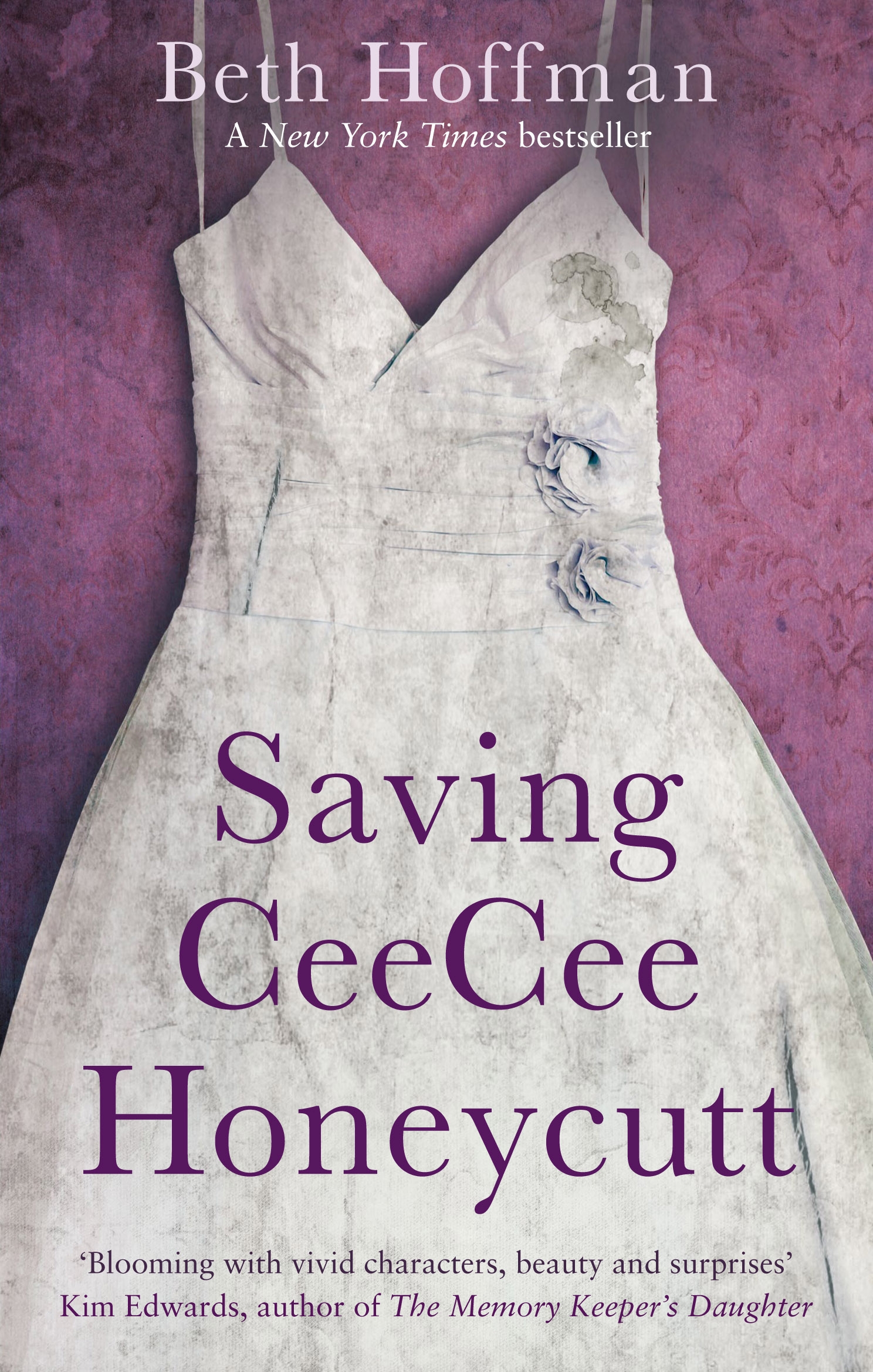
Saving CeeCee Honeycutt: Review

Saving CeeCee Honeycutt
By Beth Hoffman
Published in 2012
Published by Abacus
ISBN: 978-0-349-00018-3
(Great Britain edition)

Some of us jokingly worry about turning into our parents.  It might sneak up on us one day as we are scolding our kids, or during a conversation with friends – all of a sudden something will pop out of our mouths that sounds exactly like them.  The echoes of our parents' influence may be unexpected, but for most of us it wouldn't be unwelcome.  But for CeeCee Honeycutt, recognizing echoes of her mother within herself is her worst nightmare, and something which has haunted her every day since she read in a book that psychosis may be inherited.

CeeCee has grown up as the sole caretaker for her irretrievably mentally ill mother.  Her father, unable to face up to the realities of his marriage, has retreated into his work and is barely ever home, leaving CeeCee to bear the brunt of her mother’s unstable moods and wild antics.  Old before her time and robbed of her childhood and all semblance of normality, CeeCee turns to her beloved books and her elderly neighbor, Mrs Odell, for solace and a place of respite.  But when she is twelve years old, her already chaotic world is thrown into further disarray when her mother makes a dramatic exit from her life at the beginning of the summer holidays.

As a result, CeeCee is uprooted from all she has ever known and whisked away to Savannah, Georgia, by her Great Aunt Tootie.  CeeCee's new world could not be more different from her old life.  She has been transplanted into the warm, pillowy comfortable place dominated by a cast of fabulous female characters.  It is within this world that CeeCee starts her slow journey towards recovery from the damage done by her childhood and learns the simple joys of friendship and stability.  

 
Although CeeCee's life with her mother reads as a gritty portrayal of what it is like to live with a mentally unbalanced parental figure, her life in Georgia reads more like a fairy tale, a young girl's fantasy escape story writ large.  Life in 1970s Georgia isn't perfect, and the racial issues of the time do make an appearance, but more as side concerns to the main storyline.  While some may find this optimistic turn of events to be problematically unrealistic, I personally found it fitting.  After the brutality of CeeCee's life in Ohio, the magic of Savannah was welcome relief and an utterly charming place within which to spend some time.  This novel achieves a balanced mix of opening pathways into conversations about the serious issue of mental illness while at the same time allowing for a thoroughly enjoyable read. 

Wednesday, 1 February 2012

The Buddha in the Attic: Review


The Buddha in the Attic
By Julie Otsuka
Published in 2011
Published by Alfred A. Knopf
ISBN: 978-0-307-70046-9

I purchased this book myself for the purposes of book club. 

What possesses someone to pack up everything they own and move to a country they have never been to before, especially when they don't speak very much of the language nor understand very much of the culture of their destination country? Necessity? A dream of a better life? Wanderlust? Love? For the group of young Japanese women in this novel it was a bit of everything. They were to be married to men who they had only heard about through written letters and a single photograph. Leaving their lives, their families, their culture and their comfort zone, they set out across the ocean for America. When they arrived the reality that faced them was devastatingly different to their hopes and expectations.

Through first person plural narration, Otsuka presents the collective experiences of these women, divided thematically by significant events – from their first night as wives to childbirth to their removal from the towns and cities along the Pacific coast during World War Two. As a result of this narrative style and thematic organization there isn't a traditional plot with a beginning middle and an end. Rather the experience of reading the stories of many comes to be almost like a meditation on lives past. The choice to present this material in this way is a wise one, I think, as to do anything other than present the simple facts could create a potential emotional overload for the reader. This is not only because of the number of different perspectives and stories but also because of the confronting nature of the content within.

I remember very clearly the first time I discovered that Japanese Americans and Canadians had been removed from their homes and livelihoods during the Second World War when I read Obasan by Joy Kogawa for a postgraduate trauma literature paper. I'd had no idea that this kind of thing had happened and to be honest, I was shocked by what I learned. It hadn't mattered if these people had lived there half of their lives, or if they had been born there and were therefore citizens – in the wake of the Japanese attack on Pearl Harbor President Roosevelt authorized the exclusion of all people of Japanese ancestry from the Pacific coastline and housed them in war interment camps inland. Like I said – it's confronting stuff. But let's forget for a moment all of the why's and the wherefores of this decision. Let's hold off on the pointing of fingers and the placement of blame and guilt and focus on what it is that Otsuka is telling us to do – to listen to the voices that couldn't be heard back then.

These voices are not only of the Japanese who were interred but also of their neighbors who were very much affected by their removal. The last chapter is written from the perspective of these neighbors which shows that at first they were worried, upset and guilty about the way the Japanese had been treated. But as time passes and new stores open in place of Mr. Harada's grocery or the Imanashi Transfer, and the Instructions to All Persons of Japanese Ancestry notices fade and blow away with a stronger breeze than usual, so too do the feelings and the memories. People move on. It seems cold but it is after all, human nature to let go of things that do not continue to affect you on a daily basis. Especially when your country is about to become involved in the worst war this world has ever seen.

Otsuka's novella is an attempt to reestablish these lost stories and assure their place within the narrative of America's history. As the title suggests, it is time for it to be taken down out of the attic, dusted off and examined, honestly and with an open heart and mind. As with many novels that deal with subjects of uncomfortable moments in history this is not an uplifting read. It presents us, the present day reader, with a slice of a time gone by told through the imagined voices of those who experienced it. It's a tale of belonging, of inner strength, of cultural struggles and of real life. It's a timely reminder of how far we have come in this world, but also, perhaps, how much further we have yet to go.

Saturday, 7 January 2012

The Dirty Parts of the Bible: Review

The Dirty Parts of the Bible
By Sam Torode
Published by CreateSpace
Published in March 23, 2010
ISBN-13: 978-1450567633

I purchased this book myself. As an ebook. Again. I know!

Bad: Your parents have a massive row one night which leads to your father getting fantastically drunk and crashing his car into the side of the local church. He is thrown clear but a bird poops on his face whilst he is passed out leaving him blinded.

Worse: Your father is also the Pastor of that church.

Tobias Henry is the only child of an evangelical Baptist pastor father and long suffering mother living in Remus, Michigan. Although he has been raised in the church he has always had questions about the apparent contradictions within the Bible. His father is of the Bible as a literal document of Fact school of thought who (before his extraordinary fall from grace) preached that sex was vile and sinful and that alcohol is temptation from the Devil. How come then, Tobias wonders, are there all these references in the Bible to turning water into wine and some passages that talk of breasts? Having been involved in the Baptist church for a couple of years when I was a teenager, these are questions echo ones I also had, although I was far less concerned than Tobias about the sexual aspects of the Good Book! In the end, it was partially the failure to find answers that satisfied me that was responsible for me deciding that formal religion wasn't a good fit for me.

With these questions in his mind and a need to find a way to support his family now that his father had been thrown out of the the ministry pushing him along, Tobias sets off to Texas. His father has told him of an abandoned well on his family's farm where he hid some money many years before. Thus commences a journey of discovery and learning, guided by the unlikely character of Craw, a homeless man whom Tobias befriends along the way.

What I really connected to within this story was Craw's take on the Bible. He claims that taking the Bible literally is to miss its point entirely, that the meanings of the stories within the Bible are layered within, only found after some digging and thought. This whole idea reminded me of a discussion I had with one of my oldest NZ friends when she visited me here in Taiwan recently about Christianity. Her take is that it is not about judgement or trying to be perfect, rather it is about Grace and faith that what you believe in will ultimately be your salvation. This is an explanation which really struck a chord with me and one I wished far more people shared.

This book is a quick and fun read whilst also giving you something to chew over once you reach the final page. It's a classic coming of age tale with a twist of mysticism with a dash of romance thrown in. If you're looking for a light read with a bit of substance to it, this is a good pick.

Wednesday, 4 January 2012

Book of Mercy: Review

Book of Mercy
By Sherry Roberts
Published in 2011
Published by Osmyrrah Publishing
ISBN: 978-0-9638880-5-1

I purchased this book myself - as an e-book. Cue gasps of horror from those acquainted with my previous digital resistance.

I don't know what this world is coming to. What are the kids thinking? It never used to be like that when I was their age. We were different. More respectful. The youth of today will be the ruin of this place. Have you heard the lyrics of the songs they listen to? Seen the content of the games they play? Someone ought to do something about it....

Thus starts an idea which is skirting into the very dangerous territory of censorship. It seems to me that this concerned hand-wringing that people do about 'the youth of today' is perpetual. People were saying it about us when I was younger, before that they were saying it about my parents generation, and the generation before that. Worse still, now people my age are starting to say it to me about 'kids these days' and look shocked when I flat out disagree. The problem with this world is not aged between 12 and 22, does not attend high school and does not wear hooded sweatshirts and baggy trousers. The major issues within our societies are caused by much older and better dressed forces. But the hand-wringing continues and ideas of what sorts of materials are appropriate for the eyes and ears of the young abound.

Irene Crump is one such hand-wringer, but she's the well-dressed, powerful sort. The most dangerous sort, in other words. She is the Head of the Mercy Study Club, a group of affluent women who meet to engage in educated discussion and participate in fund-raising activities for their community in Mercy, North Carolina. She takes it upon herself to produce a list of books that can be found in the local high school library that she considers 'filthy' and demands that they are removed. Books that contain such things as witchcraft (Harry Potter), profane language like 'hell' or 'damn', teen sexuality (Judy Blume's books) or allegedly encourage disobedient behaviour. She uses her connections and gets them banned. What she hadn't counted on, however, was being publicly opposed by the feisty Antigone.

Antigone is an entrepreneur, has a way with animals, takes in waifs and strays of all species including human, and has a habit of taking off on binge drives. She is also dyslexic, meaning her relationship with the written word in her life has been understandably fraught, however when she hears about Irene's little scheme she refuses to let it stand. Books, she argues, are knowledge and being locked out from them as she has been for most of her life, is something she wouldn't wish on anyone.

What ensues is a battle of both willpower and political power - the right to freedom of speech versus the right to protect the minds of the young from harmful materials. While I certainly agree there are limits on what children should be exposed to, the definition of what is harmful is a tricky one and it's inevitably tied up with politics and conservatism. I really think that people over-estimate the ill-effects of listening to songs with swearing in them, or knowing about sex at a young age. I grew up listening to all sorts and reading all sorts. One of my favourite songs when I was 11 years old was Deep by East 17 and it was entirely about sex - although I didn't know it at the time. Goodness only knows what anyone thought when they heard me tunelessly singing lyrics like "Yeah I'll butter your toast/ If you lick my knife". I haven't ended up a pervert nor did I let anyone 'butter my toast' until a much older age. I read my first sex scene when I was around 13 I think, entirely by accident. I picked a book that belonged to my mother off the book shelves one summer holiday and started reading... Nothing terribly explicit, my mother certainly wasn't one who enjoyed Mills and Boon, but enough to give a wide-eyed girl on the verge of adulthood a bit of an education. Again, seems I haven't come out any worse for it.

This book has fun characters, a good plot line and it moves at a pretty snappy pace. Overall, it was an incredibly enjoyable read which I was surprised about, to be honest, given that the listing price on Amazon was US$0.99 (it has since returned to its regular price of US$5.75) and that I had heard nothing about it. It was refreshing to prove my inner book snob wrong and find a cheap, unknown digital book that had me enthralled until the very last page. It wasn't high literature but I didn't want it to be. It was a great escape into a good story which is ultimately what reading should be all about.

Friday, 29 July 2011

Where does inspiration come from?

Divine inspiration
Image source: Lviv Polytechnic National University
I've read a couple of great posts lately on the subject of writing, one here at Books and Bowel Movements and another at The New Dork Review of Books and Greg from The New Dork Review's reply to my comment got me thinking about something. All my life I have always had this idea that to write a great work of fiction in any format, you need to have a story bursting out of you, something almost alien that consumes you and takes over the function of your hands as you frantically type away, creating a masterpiece. To be honest I have no idea why I think like this because I know, logically, that writing is work. You produce the first draft, then the second and get feedback and rework it and rework it until it's something that you're willing to release into the world. I do this all the time with my non-fiction writing so why have I got myself in such a twist about the fiction writing aspect? Is this idea that all great novels start out as a story begging to be told within the author just a myth? Who started this myth?

I was reviewing my archive of bookish podcasts while I was pondering this when I had a vague recollection of something I heard a few years back from Alice Walker so I went back and listened to it.
"I prepared by changing my life almost completely. I was living in New York City, I was an editor at Ms. Magazine, I was married... and I knew that I could not write this story which started coming to me in the actual voices of the people... I knew I couldn't write it in the city because of the tall buildings, the noise...  I also knew that I could not remain with my husband because the world that we had was charming and good but not large enough for these people and he would not have been able to understand them and he would not have been able to understand who I was to write this, so I got a divorce... we sold our house, eventually got my half of the money from the house, moved here. The people of the story, they were very real to me. They loved the beauty of San Francisco... a lot. They didn't like the earthquakes though so I knew then I had to take them out of the city to the countryside." 
Alice Walker, speaking about writing The Color Purple
BBC World Service "World Book Club: Alice Walker"
Released as a podcast 18 November 2008


Small wonder, listening to this, that I have this embedded idea when I heard such a highly respected author saying she was so inspired that she had to get divorced, quit her job and move cross-country! Then I wondered if I had heard this from other authors and found this from J K Rowling...
Sue Lawley (DID presenter): I've heard writers before, Joanne, say that stories come into their mind and demand to be written. Is that how it was with Harry?
J K Rowling: Absolutely. It was, yes. I was 25 when I had the idea for Harry and I had been writing, if you include all of the embarrassing teenaged rubbish, for years and years and I had never been so excited by an idea in my life. I'd abandoned two novels for adults prior to that, actually the second novel I was still writing when I had the idea for Harry. For six months I tried to write them both simultaneously but then Harry just took over completely.
J K Rowling speaking about writing Harry Potter
BBC Radio  4 "Desert Island Discs"
First released 5 November 2000

If we consider here what Alice Walker and J K Rowling have said, then it really does sound like a story moves in from some other place and takes over. It's the divine inspiration idea that's been around for centuries. It's a perfectly lovely idea, of course for those who want an easy explanation of how and why art of any kind is created and why it is that some art affects some people more deeply than others does. However, for those of us sat in front of a blank computer screen with only a cold cup of coffee to hand and a defiantly blinking cursor tormenting us, it's not much comfort. What are we supposed to do? Sit around and wait for inspiration to strike? Where does this inspiration come? New York city, like Alice Walker? On a delayed British Rail train, like J K Rowling? Personally, I couldn't think of two more diametrically opposed locations in terms of potential for inspiration. What do we do in the meantime? 

I like to take comfort from this quote from Khaled Hosseini. To me, this is a more realistic tale of how a great book came into being. It started off with an idea from the piece of news that the Taliban were going to ban kite-flying in Afghanistan, something which was personally significant to Hosseini since he had loved to do this when he was younger. From there, he said, it grew.
"So then I sat down, and I thought I would just write this whimsical story about kite-flying in Kabul... and of course, stories take a life of their own and gradually what started as this little kite story became a 25-page short story about this kind of complicated friendship between these two boys, this doomed friendship. And it became a story about cowardice and betrayal and honour and guilt and forgiveness and so on. And then the short story sat around for a couple of years until the March of 2001 when my wife discovered it and read it... and then I revisited the story and realised that even though it was really flawed it had a big heart and maybe the nucleus of what could become a really interesting piece of longer fiction. And that was the basis for the novel."
Khaled Hosseini, speaking about The Kite Runner
BBC World Service "World Book Club: Khaled Hosseini"
Released as a podcast  27 May 2008

From an idea to an abandoned short story to a hugely successful novel. It took was his wife's interest and enjoyment of the story for him to realise that this story was one that had massive potential, that 'big heart' despite all of the flaws that he could also see in it. 

I know that all stories have to come from somewhere, but I'm starting to think that they don't have to necessarily be that lightning strike of inspiration. Perhaps not everything we write is going to be that number one bestseller or Booker Prize winning story. Maybe we need to write a bunch of so-so stories before we can write the really good one. In the same way that you would never imagine that you'd go out and run a marathon with no prior training, maybe I should reconfigure my view to think of all writing as training for the 'big event', that hoped for and dreamed of published book. I mean, seriously. Even J K Rowling said that she'd been writing for 'years and years' before Harry came along and do you think that Alice Walker never wrote anything before The Color Purple? Exactly. I don't doubt that they really did experience that extraordinary 'boom' of inspiration but looking at Hosseini's story, it doesn't seem like it is as necessary as I once thought it was. Sure you need an idea, but that idea can just as easily germinate from a small seed as it can be transplanted into your brain. 

Looks like I just need to get myself into training for when that idea comes along. 

How about you? What do you think of the "story that just had to be written" idea?
Sunday, 3 April 2011

Someone Knows My Name: Review

Someone Knows My Name
By Lawrence Hill
Published by W. W. Norton and Company Inc.
Published in 2008
ISBN: 978-0-393-33309-1
Note: This novel was first published in Canada under the title The Book of Negroes.

Some books are pleasant enough reads but drift out of memory not long after the last page is read and the cover closed. Others, however, affect you in such a way that you walk around in the grip of the story for a good while after finishing the book. Someone Knows My Name was one of those books - spanning 56 years and three continents, it follows the life of Aminata Diallo, a young girl snatched from outside her village in Africa and sold into slavery. Her story is one of survival, a constant battle against seemingly insurmountable odds. The narrative tracks her journey from her village Bayo to the coast of Africa, across the Atlantic ocean to Southern Carolina, north to New York, further north still to Nova Scotia in Canada, back across the Atlantic to Sierra Leone and then finally to London, England. It is here in London that Aminata is writing out her story as testimony that will be used by those seeking to abolish the slave trade.

The inspiration for this story is the Book of Negroes, a little known document listing the names and details of all of the Black Loyalists (those on the side of the British, that is) who were evacuated from New York during the American Revolutionary war. In the novel, Aminata, thanks to her exceptional literacy, is one of the scribes for this document. The novel goes far beyond just the creation of this document and the evacuation, however. It covers the all sides of slavery, from acquisition to freedom to abolition.

The character and story of Aminata is one that will keep you enthralled. She is strong, capable, sassy and incredibly smart - someone who makes herself at home in your heart and mind and doesn't leave. The only quibble I had with this book was that her story was a little too exceptional at times. Although no single event was necessarily implausible, it seemed that for everything to have happened to one person was too convenient. It was as if the story that the author wanted to tell was too big to be restricted to the experiences of one character. If you can suspend your disbelief, however, this is certainly a great read. There is plenty of action, a colourful cast of characters, excellent historical and geographical detail and plenty of food for thought. Although the events described happened a long time ago, their effects still echo down the generations. Novels like this provide us with real access to histories we might not have encountered otherwise and illuminate that which may not previously have seen. I definitely recommend this book.

Tuesday, 8 March 2011

Snow by Orhan Pamuk: Review

Snow
By Orhan Pamuk
Translated into English by Maureen Freely
Published by Vintage International
Published in 2005
ISBN: 0-375-70686-0


I read this book as part of an international bookcrossing ray and was not paid for this review.


This book took me a long time to get through. It was like walking along a street covered in snow - beautiful, enchanting, fraught, slow going and hard work all at once. It was one of those books that demanded time and attention, not something that could be quickly read and put aside. It was determined to tell me the story, sit me firmly down in the tea houses of Kars, lean in uncomfortably close and make sure I heard every single word. And I did, but at the end of it I have this horrible grasping feeling that I haven't managed to fully understand the effect of it all...


Kerim Alakuşoğlu, or Ka as he is known throughout the majority of the novel, is a Turkish-born poet who has been in political exile in Frankfurt, Germany for the last 12 years. He has come to the city of Kars in Turkey investigate the suicides of a few members of a group of Muslim girls who are known as the Head Scarf Girls on account of their insistence that they be able to wear head scarves in accordance to their religious beliefs. The reason for their suicides is unclear - some claim it is because they are being banned from education unless they remove their head scarves, others say it is because of lost love affairs. One thing is clear though: these girls are falling between the cracks of male rhetoric. For all the speculation, these girls remain in death as they were in life, without a voice that can be clearly heard. 


Despite this being his primary declared motive for coming to Kars, Ka also has an ulterior motive - to win the heart of his ex-classmate İpek whom he has heard is now divorced. He arrives in Kars in the midst of a terrible snowstorm that blocks the roads and effectively isolates the city from the restof the world. What plays out is one part political intrigue mixed with two parts ugliness of human nature sprinkled liberally with hope beyond reason. 


The most striking thing was contrasting of the "West" with Islam and what happens when one gets caught in the middle ground. This issue sure isn't a new one but has been a hot button topic for the last decade since September 11th. Turkey is an interesting place as it is often referred to the place where the West meets East. Throughout the novel the tug-o-war between the two is clearly felt as one tries to dominate the other... or more specifically, the ways of the West try to come in and modernise and update the 'backward' ideas of the East/Islam. This is an idea I've long been uncomfortable with, the idea that we in the West have got it all sorted and the rest of the world should sit up and listen and adopt our ideas. Sure, we have some good ideas but not all concepts are universally applicable. Not everyone wants what we have. Who is anyone to assume that changing years of established culture, thinking and education is necessarily a good thing? All of these questions are far too big for just one blog post and my intention isn't to answer them anyway. My point is that this novel looks into these ideas and gives everyone pause for thought, which is one of the best things any novel can do: take on the big issues and force the reader to re-evaluate their own position. 


If you're feeling in the mood for a great read that will challenge you mentally and politically and you have some time to dedicate to it, this is definitely a great book. It's one of those books I will still be thinking about in years to come. 


Have you read a book recently that challenged you politically? What was it and how did it challenge you? 

Friday, 25 February 2011

Spinning: Review

Spinning
By Michael Baron
Published by The Story Plant
Published in 2011
ISBN: 978-161188005-2

I was kindly sent this book by the publisher but not paid for my review.

We all know that guy. The guy who can hardly keep it in his pants, the one who seems willing to trample on anyone to get where he wants to go, the one always seen after work with a drink in his hand and a witty comeback on his lips. This guy in this novel is Dylan Hunter. Dylan has got it made - he lives in New York, has a fantastic PR job, and a string of women after him. Even though he acknowledges that he will eventually settle down, he doubts it will be any time before he hits 40... that is until Diane and Spring walk into his life at 3 a.m. one morning.

Diane is someone he had a fling with a few years back in Chicago, so when she arrives on his doorstep with a daughter about the right age naturally Dylan assumes she's his. She's not but she makes a huge impression on his life all the same. Diane and Spring stay with Dylan for a few days and give this perpetual bachelor a taste of domesticity - one he finds pretty enjoyable. But because life never goes how you'd expect it to, he suddenly finds that he's in for far more than just a taste when he becomes Spring's sole guardian.

This book is a fresh perspective on a familiar story. Normally we'd hear about the single Mom moving to the Big Apple with daughter in tow from the mom herself but this time we're hearing it from the guy. The result is that when reading this you get both a comfortable feeling when reading a narrative you've heard before (but love revisiting) and a feeling of newness. It's an interesting combination but one I very much enjoyed. The story is a good, easy read which keeps the reader involved. The development of the character of Dylan is particularly satisfying to watch but I think my favourite person in this novel is undoubtedly Spring. Spring is the embodiment of the joy of childhood - the innocence, playfulness and timely reminder that there are far more important things in life than wondering about your next sales pitch or chatting up someone at a bar. Spring gives Dylan's life depth and meaning and transports him from being a 'lad' into being a man.

The ending of the book works, but it wasn't what I was expecting. I was rather hoping for something a little different (admittedly, the more predictable ending) to what actually happened and as a result the book finished on a bit of a hiss compared to the roar it had been most of the way through. I know, I know, endings are the hardest part of anything to write but if you're given a choice between doing something unexpected and doing the expected (which usually gives the readers what they want) you really need to have a very cool unexpected ending to make it worthwhile. I'm hard to please, what can I say?

Aside from my minor quibble with the ending, I really liked this book. It's perfect Sunday afternoon/holiday reading - not too heavy, not too light, engaging and satisfying. If you'd like to read a love story/coming of age tale from the bloke's perspective, this is a good place to start.

Tuesday, 22 February 2011

Her Fearful Symmetry: Review

Image credit here
Her Fearful Symmetry
By Audrey Niffenegger
Published by Vintage Books
Published in 2010
ISBN: 078-0-099-52418-2

Hubby dearest bought this book for me and I was not paid for this review.

Do you ever find that sometimes your reading follows strange and unplanned themes? I had a run of this recently. I read The Thirteenth Tale and then read this book, both books had multiple sets of twins in them and warped family relationships. It's funny how books do that to you sometimes - it's like one book is feeding onto another, interconnected. The relationship between many twins is the same way - you're not totally sure where one twin ends and the other begins. They're close in a way not a lot of people experience or even understand, bonded right down to the cellular level.

Julia and Valentina Poole are two such twins. Young, beautiful, exceptionally gifted but completely directionless, they are drifting through life. Julia, the dominant twin has ideas but no staying power, dragging the submissive Valentina ("Mouse") behind her. Never mind that Valentina has dreams of her own, Julia just assumes that these will be overridden  by a desire for them to always be together.
However, an opportunity for change comes when their Aunt Elspeth dies and leaves her London apartment to them... on conditions that they live there for at least one year before they sell it and their mother, Elspeth's twin Edie, and their father never set foot in the house. Intrigued, the twins pack up their lives in America and head for England. When they arrive they encounter Robert, their Aunt's much younger lover who lives downstairs; Martin, a crossword setter who lives upstairs in the throes of severe obsessive compulsive disorder; and various other people who work in the Highgate cemetery over which their apartment looks and with which their lives become entwined.

Highgate Cemetery
Image credit here
Locking down the specifics of what kind of story this is proved complicated. It's a ghost story, it's a family drama, it has elements of mind-bending fantasy in it not to mention mystery. It is, in short, Niffenegger at it again. Was The Time Traveller's Wife a love story or a sci-fi? Both? Whatever it was in genre, it was certainly one of my all-time favourite books and so I was very much looking forward to reading this one to see what she'd come up with next.

I liked this book but at times it is just plain weird. It takes your ability to suspend disbelief right to the outer limits and then some but not because it's a ghost story. What I found weird, and also utterly intriguing, was the dynamics in the relationships. The sense of smothering in the closeness of Julia and Valentina, the constant bugging question of why Elspeth and Edie were estranged for so long, the haunting of the girls by Elspeth... it was all very convoluted. I like twists and I really appreciate it when the author manages to surprise me but this book went above and beyond that. It had me staring at the pages in gobsmacked amazement, shaking my head. Especially at the end. I think it lost a bit of traction at the end and careened off into la-la land.

The Time Traveller's Wife was a heck of an act to follow and I think my experience of this book may have been a little clouded by the fact I enjoyed its predecessor so much. But random plot twists aside, I did enjoy this book. If you haven't yet read it and are considering it, my advice is forget it's written by Audrey Niffenegger. Put Time Traveller's Wife out of your head and you'll find this a fun read. Mind blowing, reality warping, occasionally jaw-dropping but overall, fun.

Have you read this book and/or the Time Traveller's Wife? Let me know your thoughts!

Other reviews of Her Fearful Symmetry:
Bex at An Armchair By The Sea

Sunday, 30 January 2011

The Thirteenth Tale: Review

The Thirteenth Tale
by Diane Setterfield
Published in 2006
Published by Washington Square Press
ISBN: 978-0-7432-9803-2

I borrowed this book from a friend and I was not paid for this review.

When a well known figure refuses to tell us their life story, we tend to get a bit annoyed. They're famous! How can they possibly expect any privacy?! As ridiculous as I know that is, I am just as guilty as anyone else on this count. I want to know about the authors who write my favourite books, the actors in the movie I just watched or the latest television series I happen to be obsessing over (Dexter and Castle right now) and, I hate to admit, love to read the Entertainment section on the news website. Normally before I read the world news.

So imagine, then, the intrigue of being approached by a hugely successful and reclusive author to be the one person to whom she will tell her full story. It's enough to get Margaret Lea to leave the comfort zone of her father's bookstore and venture up to the Yorkshire Moors to meet Vida Winter. Ms. Winter is the grand mistress of fantastical fiction, especially fantastical are the tales she tells to nosey journalists who ask about her personal life. But this time she intends to tell the truth. She has a painful past to get out of her system and time is running out.

This novel spins together all of the threads I love the best: a bookworm heroine, the dark, blustery setting of the moors, an old house, a terrible family secret (or three) and beautiful writing. As Ms. Winter reveals more about her past, you can't help but be completely enveloped by her story and the fact that half the time she's withholding vitals bits of information that Margaret has to unearth herself only makes it all the more fascinating.

The best bit about this novel for me was that it felt a little bit like Wuthering Heights revisited. It has this wonderfully atmospheric feel to it which triggers a sort of primal urge to throw caution to the wind and sprint across the moors in the middle of a storm. Like Wuthering Heights it kept me riveted, unable to tear myself away from the story unless my husband staged a physical intervention and removed the book from my white-knuckled hands. Basically, this book is one that is at once literary, enjoyable and thoroughly engaging. It is one that I think would be safe to recommend without abandon and I do. If you haven't already read it and you're looking for a great read, this is one for you.

Have you read this book? If you have, what did you think?

Saturday, 15 January 2011

Room by Emma Donoghue: Review

Room
By Emma Donoghue
Published in 2010
Published by Picador
ISBN: 978-0-330-51992-2

I was given this book as a gift from my fantastic husband and I was not paid for this review.

The Josef Fritzl case shocked anyone who heard about it. A father who had locked away his teenaged daughter in a custom built apartment in the basement of the family home and used her as a sex slave. She fell pregnant 8 times, although she lost two: one to miscarriage and one to respiratory disease. Her twenty four year ordeal all came to light in 2008 and I guess it's fair to say that a lot of us had been watching and waiting for some kind of literary response to this, a way of making sense of the darkness and the horror.

Although Donoghue's books is inspired by the events of the Fritzl case, she wisely steers away from replicating the exact circumstances. The captor is not the father, they are not kept in a basement and there is only one child, Jack. And it's Jack who is the focus of this novel. He is five years old and has never been outside of Room, the modified garden shed in which they are held. In fact he has no concept of the outside world as his mother has chosen to not explain it. He thinks the entire world consists of this room, that the television channels are different planets orbiting the room and that his mother's captor, Old Nick, is the supplier of all things. However, as the novel progresses, it becomes increasingly apparent that they need to escape. Jack's mother (Ma) realises that Old Nick is capable of far worse than holding them here for the rest of their lives and hatches a plan with the help of Jack to get out.

This book captivated, repulsed and inspired me. All at the same time, all the way through. It's a car crash story - you can't stand it but you can't look away and all the time you have the knowledge that something like this really happened... it's creepy. The character of Jack is a completely believable portrayal, not only  of a five year old child but of a five year old who has no concept of the outside world. His language reflects his worldview as he doesn't use any articles, such as 'the'. Room isn't 'the room' because to his knowledge there are no other rooms and so since there is only one, then there is no grammatical need to use articles. So everything is just Bed, Wardrobe, Skylight - capitalised as if there were only one of them like there is only one of Jack.

The part of this story that intrigued me the most was the relationship between Ma and Jack. As I'm now in the age range where a good portion of my friends are now becoming parents, I regularly hear that all parents need 'time off' to get some space away from the kids and to just relax - something I completely agree with - but imagine being in one small room with your child, 24/7 for years. Under these circumstances. The way in which Ma interacts with Jack, teaching him stories, making sure he gets daily exercise and love is one of the most moving things about this book. I don't know if it's just because I'm around the same age as her character or if it's because I'm starting to think more seriously about becoming a mother myself but I just couldn't help but wonder what on earth I would have done in her position. I have no idea and thank God I won't have to find out.

I'd wanted to read this book ever since the 2010 Booker prize longlist came out and I heard about it on the Guardian Books Podcast. I was pretty disappointed when it didn't win but it's safe to say that this is a book that is hugely successful and deservedly so. It gives you so much to think about and genuinely changes your perspective on the world by giving you the opportunity to see life through the eyes of Jack. This was one of top three books I read in 2010 - I really can't recommend it any more highly.

Have you read Room? What did you think of it?

Related links:
Guardian Books Podcast about this book with interview with Emma Donoghue
Once upon a life: Emma Donoghue
The Official Emma Donoghue website
An extract from Room

Photo credit: Sarah Lee for the Guardian

Thursday, 13 January 2011

Sarah's Key: Review

Sarah's Key
By Tatiana de Rosnay
Published in 2007
Published by St. Martin's Press (1st ed)
ISBN: 978-0312370831 


I read this book as part of my book club and I was not paid for this review. 


Dark days. Every country has at least one of these in its history, some have many more. This novel is about one of France's less shining moments, when French Police rounded up hundreds of Jewish men, women and children and kept them in inhumane conditions in the Velodrome d'Hiver before being shipped off to their deaths in Auschwitz. Some Parisians tried to help them, most turned a blind eye. 


The story has two intertwining narratives. Sarah, the girl of the title, locks her brother in a concealed closet when the police come knocking on her family's door, thinking that she will be able to return and rescue him. Julia, an American journalist who has lived in Paris for most of her life is asked to write a story about the Roundup for its sixtieth anniversary. She finds the story captivating and quickly becomes personally involved in her research, particularly when she discovers that her husband's family's and Sarah's histories overlap. 


It's a very interesting premise but I just couldn't lose myself in this book. I found that the characterisation of Sarah was a little heavy handed and felt that she had been created more for the purpose of being the vehicle or the author's musings on 'how could the French Police have done such a thing' rather than being a real imagining of a 10 year old girl being wrenched from all that she knew and losing everyone she loved. Additionally, the relationship between Julia and her over-sterotyped French husband (snide, xenophobic and philandering but makes it up to her with amazing sex - oh come on) didn't ring true for me either. 


Another issue I had was the ending. I don't want to give too much away or those who haven't read it yet but I just have to say that I didn't believe the ending. I don't think that Sarah would have done that and I certainly didn't believe the implied romance between the two characters at the end. It fell flat and let the last gasp of air out of a book that could have been really good. 


That said, my rating of this book was 2.5/5 at our book club but other people really loved it and gave it 4/5. To it's credit, it taught me something I didn't already know and I liked the descriptions of Paris. It's not a bad book, it just didn't move me the way I wish it had. 


Has anyone else read this book? If you have, were you surprised to find out about the round up?


Other reviews of this book: 
The Literary Amnesiac
The Avid Reader's Musings

Tuesday, 28 December 2010

The Year of the Flood: Review

The Year of the Flood: A novel
By Margaret Atwood
Published in 2009
Published by Anchor Books
ISBN: 978-0-307-45547-5

I own this copy of this book and was not paid for this review.

For quite a long time now, I have been interested in post-apocalyptic and dystopic fiction. Not the apocalyptic stuff where the world is about to end and everyone runs down the street screaming while buildings fall down en masse. No no no. I care about the what next? What happens after? What do you do when the fabric of society has been shredded to pieces and survival is your top priority. What happens to the people in this situation?

A number of years back, while studying English Literature at undergraduate level, a lecturer who is now happily my thesis supervisor introduced me to Margaret Atwood through Oryx and Crake. I was instantly hooked, completely consumed by the weird and wonderful future world she had created - so you can imagine my excitement when I heard a sequel was being released. I've been wanting to read it since I heard about it, so when a friend passed it along to me I was thrilled.

Only, I'm not sure I want to call it a sequel. It's another angle on the same story, told from the perspective of two women (Ren and Toby) this time instead of the male perspective of Jimmy. It's Oryx and Crake from the other side of the looking glass filling out and expanding on the same story whilst also being an entirely self-sufficient novel. If you haven't read Oryx and Crake it doesn't matter and if you have, this story won't bore you.

The story is told from the perspective of Ren and Toby, separately. We meet them in Year Twenty-Five, the year that the flood has hit but we are transported back in time for large sections of the novel to various points in time in the preceding twenty years when both Toby and Ren lived with a small environmentalist sect called The Gardeners. Through these flashbacks the reader learns a great deal about the lead up to the so-called "Waterless Flood" - a fatal pandemic of epic proportions - and life in the pleebs, the seedier living areas outside of the well-groomed corporate controlled compounds.

As with Oryx and Crake, human progress gone mad is a key theme in this book. The same weird animal combinations that exist as a result of gene-splicing are there as is the intriguing but terrifying darkness. No-one is safe - security is controlled by corporations, law is controlled by corporations and those who speak out or put a foot wrong usually disappear permanently or are found in a gruesome state a few days later. I think this is the part of this novel that captivated me the most because I kept thinking none of this is impossible. Every single thing that happened in this novel is possible right now in our world. The technology and power struggles already exist. Which is not to say that this is an inevitability for society but it should surely be read as a warning of the darkly possible future that is lurking in the shadows of today's multi-national corporations and technological advances.

I unreservedly loved this book. I thoroughly enjoyed the story, the characters and the possibilities it presented. I completely recommend this book, particularly if you're a fan of the dystopic/science fiction genre. But even if you're not, if you're a fan of a really good story that has really interesting and unique ideas - read this book. And Oryx and Crake too.

Have you read either of these books? Which other post-apocalyptic/dystopic fiction have you read and enjoyed?

Tuesday, 23 November 2010

Smoke of Spirits: Review

Smoke of Spirits
By Claire Frances Raciborska
Published in 2010
Published by Falconers Press
ISBN: 986-865-170-0

I was sent this copy in exchange for my review by the author. I was not paid for this review.

Before I moved to Taiwan, someone once told me that in every expat community there tends to be a significant proportion of people who have run away from something in their home country. Whether or not you agree that this is true, this concept of running away from your past is the basis of this novel. Lucy, our protagonist, has found herself in Taiwan after what feels like a mad dash away from her native South Africa in a bid to maintain her sanity and salvage her identity. What she finds here is a raft of unlikely companions and an affinity with this crazy wonderful island that I also call home.

Who are we? Are we our culture? Are we our past? Are we who others think we are? These questions are universal as people from everywhere struggle to figure out who they are. When Lucy comes to Taiwan, she is guilt-ridden and cast adrift from her immediate family as a result of a recent tragedy. We find out in the prologue that she believes that she has killed someone and that this someone was very close to her - but that's about all we find out about it until the very end of the novel. In between time we meet a cast of characters who become Lucy's makeshift family: Rashnid, who has left India to escape religious and social restrictions; Missy, who has left Australia due to commitment phobias and Jenna, also South African, who has come to Taiwan to celebrate her new-found freedom from the shackles of an unhappy marriage and the responsibilities of motherhood.

Something this book does extraordinarily well is to track the arc of culture shock that most foreigners experience upon arriving in Taiwan. From the oft referenced "trafficking drugs carries the death penalty" sign which you see as soon as you get off the plane to the inexplicable feeling of menace lurking around every corner, the description of this experience was so close to mine it was like reading my diary! Luckily, as Lucy settles in to Taiwan, she comes to love Taiwan with all its hidden beauty and the warmth of her people meaning that the experience of culture shock is contextualized and dealt with rather than leaving the reader with the feeling that Taiwan really is a scary, nasty place. Reading this book really gives you an excellent insight into what it's like for someone from a western culture coming to live in Taiwan. If you're interested in coming here, this book is a good place to start. Yes, it's fiction but all in all, it's an accurate depiction.

There were a couple of things I had a problem with in this book. The first was how long it took for the full story of what happened to make Lucy run away to be revealed. I really don't like being given repeated teasers of "Something terrible happened to me" without being told something new about it. I don't mind waiting for the full story but I do take issue with being reminded that I still don't know. Building suspense for a reader is great but stretched too far can just cause frustration.  The second issue I had was that the ending was a little strange for me. The concept behind it is really good but it didn't feel like it was smoothly woven into the fabric of the rest of the story.

Overall, this was a very high quality novel. So far it has been self-published but I wouldn't be surprised at all if a publisher picked this up - in fact I really hope they do. It's very well written, it has a great story set in a setting that not many people know that much about but it has themes that are international in their reach, making it a tantalizing mix of the original and the universal.

If you're interested in getting a copy of this book, please check out this webpage.

Saturday, 13 November 2010

The Secret Life of Bees: Review

The Secret Life of Bees
By Sue Monk Kidd
Published by Penguin Books
Published in 2002
ISBN: 0-14-200174-0

I found this book at the CSC-Taipei's Official Bookcrossing Zone and I am not being paid for this review.

"Then, without warning, all the immunity wore off, and I felt the hollow, spooned out space between my navel and breastbone begin to ache. The motherless place." (151, TSLOB)

This was, for me, the most heart-rending and accurate lines in a novel that I've ever read. Lily, who accidentally shot her mother in the midst of a domestic between her parents has been living with overwhelming guilt and grief her entire life. Not only this but she has had to tolerate a mean-spirited father whose idea of a fair punishment is to make her kneel on grit for extended periods of time. Lily, as a result is left, un-parented and desperate for love and affection.

She finds this in the least likely of places - she runs away from home after rescuing her coloured maid, Rosaleen, from a certain doom at the hands of a bunch of racist men she insulted. Not knowing where else to go, she heads for a town scribbled on the back of a wooden placard with the photo of a Black Madonna her mother once owned. What she finds are the Boatwright sisters, three coloured women living together who make the brand of honey that bears the mark of the same Black Madonna that Lily clutches in her hand.

This story unfolds in South Carolina in 1964, a time of great racial unrest in America. In theory, segregation had been outlawed but the prejudices still remained deeply entrenched. In stark contrast are August Boatwright's bee hives, where hundreds of bees live in harmony with each other and nature. The symbolism of the hive is strongly drawn upon throughout this novel as Lily struggles to come to terms with her past, her feelings and find her place in the world.

I loved this novel. It is beautifully written, deeply involving and very thoughtfully presented. The symbolism of the hive and the bees was very interesting to me as I felt like I'd learned a lot about bees through reading this. The sisterhood of the Boatwright sisters and their Daughters of Mary friends draws a warm blanket around the shoulders of all those who read this. Nobody is an outsider, all are accepted. I would recommend this novel to all who are looking for a novel that will challenge them uplift them and leave them with something to think about once it is finished. It really is top-notch.

Tuesday, 18 May 2010

The Guernsey Literary and Potato Peel Pie Society: Review


The Guernsey Literary and Potato Peel Pie Society
By Mary Ann Shaffer and Annie Barrows
Published by Bloomsbury
Published in 2009 (Paperback)
ISBN: 978-0-7475-9668-4

I read this book as part of a bookcrossing book ring and have not been paid for this review.

Every once in a while I come across a book that I REALLY want to read. Once this happens it is inevitable that I won't be able to read it for a variety of circumstances for a good long while, thus heightening my desire and anticipation. So many times this dangerous combination of expectations and desire has brought me crashing to my reading knees when a long waited for book turned out to be really rather average, or, worse, totally crud. I have waited for a very long time to read TGLAPPPS. Maybe close to 7-8 months. I was not disappointed.

Picture of Guernsey

Set in 1946, just after the end of World War II, Juliet Ashton is looking for a new subject to write about. Something serious, something meaningful - something that can get her away from her the comedic writer box she has firmly been placed in due to the success of her war-time commentary under the persona of Izzy Bickerstaff. Out of the blue, Dawsey Adams writes to her as he has somehow come to possess a book she once owned and has fallen in love with it. However, given his location on Guernsey he is a little hard put to find other books and so has written to Juliet for help. This initial contact begins a friendly correspondence that blossoms into something far far bigger.

The narrative structure of this novel is that of a series of letters to and from an ever-increasing series of characters which I found to be very engaging but those who prefer a more straightforward narrative style might find it challenging. I loved the personal element to it - each character had a distinctive voice that I felt connected to throughout the novel - and I felt that despite the limiting nature of the narrative structure, nothing was lost in terms of storytelling. 

The writing in this book is wonderful and satisfies you in a way that a bowl of chicken soup does on a cold day. It's not overly flowery but describes the island extremely well - so well in fact that I can still see the mental image of it in my head 3 weeks after I finished reading it. Add to that the subject matter - entirely about reading and books and well hey. You've really got a winner on your hands. 

One of the most interesting things about this book was that it taught me something I had no idea about. I had no idea that the Channel Islands were occupied during WWII and I had no idea to what degree the inhabitants of the islands suffered under German occupation. It was a huge hole in my historical knowledge - I mean I have many of these sorts of holes but this one was about a time period I knew a fair amount about and in a place that is owned by my home country. But far from being depressing and downbeat, this novel manages to deal with the awful things that happened in an upbeat manner that focusses on hope and everyone pulling together. The people of the GLAPPPS are exactly the kind of people you would want to be stuck on an island with under those circumstances, should you have to be.

I absolutely LOVED this book. My one complaint was that it was too quick - I read it in 2 days - but then again I would happily read this one again, just not this copy as I need to get it sent on it's way to the next book-ring reader! If you've thought about reading this book but have been a little put off by the hype - don't be. It's worth every bit of the hype and then some. It's a gem of a book that I'll be putting on my "You have GOT to read this" list.

Saturday, 20 March 2010

The Girl with the Dragon Tattoo and Feminism

When it comes to over-hyped books I am the Ebeneezer Scrooge of readers. Bah humbug, I declare. You won't catch me reading that! I proceed to shun said hyped book until it has been forgotten by the rabid media dogs or it gets proven to be a genuinely good book by those with a half-decent opinion of what a good book looks like. Some might call me a book snob, but I just know what I like to read and don't fancy wasting X amount of hours on a book just because everyone else is reading it unless it's actually worth it. If you could see the size of my "To be read" pile you'd understand.

The Steig Larsson trilogy were firmly in the "Over-hyped" category for me so I decided to wait until the melee calmed down. Once it did and it was voted in as the April Book for our bookclub, I thought what the heck and bought it.

On the surface, I thoroughly enjoyed it. It kept me amused through two long and tedious flights from Hong Kong to Sydney and back again which is a fair achievement as planes are one of the only places on earth I find it nearly impossible to read (or sleep, but that's another story). It absorbed me. It scared me. It grossed me out. It was, all in all, a damn good thriller.

But there was something bugging me about it... Each new section of the book was marked with some proclamation about violence against women, for example Part One states that "eighteen percent of the women in Sweden have at one time been threatened by a man." Which made me think that the late Steig Larsson must have something to say about violence against women, but throughout the book the women were subjected to an near unbelivable amount of horrific violence, both physical and sexual. Something didn't sit quite right for me.

Indeed, I'm certainly not the first to point this out. A quick search of reviews showed that this issue has divided critics between claims that Larsson was a closet mysogynist and those who believed that Lisbeth Salander was a sort of feminist avenging angel that righted the wrongs of those who were abused. This article discussing these claims got me thinking.

Photo Credit: Here
Having studied feminism and long been a feminist I wanted to throw my hat into the ring. I don't want to accuse Steig Larsson of being a closet misogynist exactly but I think the problem is that this book doesn't entirely understand the truth about violence against women. Although there are undeniably psychopaths out there who do unspeakable things, the majority of violence against women is not perpetrated by these sorts of people. Those who beat, rape and intimidate women are, on the whole, not crazy - they're your average Joe Bloggs who come across as being very nice and normal sorts of people. Absolutely, they're the scum of the earth but they're not lunatics. On the whole women are not tortured in custom-built basements but in the spaces where you and I live out our daily lives.

By choosing to portray men who are violent towards women as psychopaths is essentially unhelpful. It hides the truth of the situation all over the world and does nothing to make us question why it happens and why nothing more is done to stop it. Lisbeth Salander is without question an ass-kicking woman who takes matters into her own hands but her actions are unrealistic. It's a cathartic read but she is the stuff of fantasy.

I wonder whether choosing the way this story played out was politically based or driven by what would make a 'better story'. Domestic abuse is not sexy in the same way as a serial psychopath with incestuous tendencies is - it's a depressing reality. Although the women who have survived the abuse and violence in this book do seem to get their revenge, I don't think that this book can be seen as feminist. It is too far outside the realm of reality and plays into the hands of necessary genre cliches. Women who have suffered the day to day actuality of abuse are offered nothing of use other than a few hours of escapism into a world where the normal rules don't apply and 'avenging angels' can inflict justice on the monsters of this world. The Girl with a Dragon Tattoo is a ripping read but nothing more.

**If you or someone you know is being subjected to any kind of abuse, please call your local Women's Shelter, Rape Crisis Line or relevant agencies.**

Tuesday, 9 March 2010

A Gate at the Stairs: Review

A Gate at the Stairs
By Lorrie Moore
Published by Alfred A. Knopf
Published in 2009
ISBN: 978-0-375-40928-8

It's a feeling familiar to many of us, I'm sure, that desire for escape from the seemingly narrow-minded and suffocating hometown to the bright lights and stimulation of university in the city. It's an intoxicating mix of new people, new ideas and, most of all, freedom. At eighteen we think ourselves old enough to handle it all, but in reality most of us are only just finding our feet and so the results can range from the cringe-worthy to the downright disastrous. Enter Tassie Keltjin, daughter of an under-emotional mother and a father who has made his name growing gourmet potatoes, who has grown up in a nondescript small rural town who has been seduced by Chaucer, Sylvia Plath and Simone de Beauvoir and is doing all  she can to shed her old skin and become someone new.

She takes on a part-time job as a childcare provider for two professionals who are in the process of adopting a child, falls in love with a exotic boy from her Sufism class and along the way learns some very hard lessons. Tassie is a loveable character, endearingly neurotic and naiive, quick to fall in love and eager to try new things, be it learning Portugese or eating Chinese food. To be honest, she really reminded me of myself when I was 18 or 19 years old.

The writing in this book is excellent. Reading it is like savouring a really good cheese with a glass of wine outside on a warm summer's evening - it's blissful and almost a little indulgent but in the best way possible. Moore usually writes short stories, something which is evident in the way she puts her prose together. It comes off as thoughtful but at the same time effortlessly elegant making this book truly a pleasure to read.

The reason I read this book was for my thesis on post-9/11 literature. This book is the most recently published example of this genre that I've read and found it to be the most subtle in its dealings with the events of the day. This story moves beyond the horror, the smoke and the images and skates into less explored territory of estrangement and disconnection between people. It makes for a delicate and in-depth look into the psyche of America, one that has moved beyond the knee-jerk reactions, through the dead-eyed traumatic reactions and out the other side into the reflective. It's interesting to see the evolution of responses develop.

A Gate at the Stairs is a novel that will hold up under any level of scrutiny, from those wanting a piece of well-written escapism through to those who want to dig around in the bowels of the thing for further meaning. It doesn't matter who you are - I really recommend this book. There is only one thing I would say: before you read it, don't read the dust jacket blurb. It's a little misleading and can colour your expectations of the text in a way that will leave you dissatisfied. It's better to know less and enjoy the story as it unfolds rather than expect it to go one way and be disappointed when it doesn't!